%20--%3e%3csvg%20width='42mm'%20height='64mm'%20viewBox='0%200%2041.999999%2064.000001'%20version='1.1'%20id='svg1'%20xml:space='preserve'%20inkscape:version='1.4.4%20(dcaf3e7d9e,%202026-05-05)'%20sodipodi:docname='adkumo-cards-color.svg'%20xmlns:inkscape='http://www.inkscape.org/namespaces/inkscape'%20xmlns:sodipodi='http://sodipodi.sourceforge.net/DTD/sodipodi-0.dtd'%20xmlns='http://www.w3.org/2000/svg'%20xmlns:svg='http://www.w3.org/2000/svg'%3e%3csodipodi:namedview%20id='namedview1'%20pagecolor='%23ffffff'%20bordercolor='%23000000'%20borderopacity='0.25'%20inkscape:showpageshadow='2'%20inkscape:pageopacity='0.0'%20inkscape:pagecheckerboard='0'%20inkscape:deskcolor='%23d1d1d1'%20inkscape:document-units='mm'%20inkscape:zoom='1.4142136'%20inkscape:cx='57.275649'%20inkscape:cy='123.39013'%20inkscape:window-width='1854'%20inkscape:window-height='1011'%20inkscape:window-x='66'%20inkscape:window-y='32'%20inkscape:window-maximized='1'%20inkscape:current-layer='g6528'%20/%3e%3cdefs%20id='defs1'%20/%3e%3cg%20inkscape:label='Layer%201'%20inkscape:groupmode='layer'%20id='layer1'%20transform='translate(-223.82077,-58.584489)'%3e%3cg%20id='g6528'%20transform='translate(9.9863014,0.36985863)'%3e%3crect%20style='fill:%239a5bfd;fill-opacity:1;stroke-width:0.229954'%20id='rect1'%20width='20'%20height='20'%20x='213.83447'%20y='58.21463'%20ry='5'%20/%3e%3crect%20style='fill:%239a5bfd;fill-opacity:1;stroke-width:0.229953'%20id='rect1-8'%20width='20'%20height='20'%20x='235.83447'%20y='102.21463'%20ry='5'%20/%3e%3crect%20style='fill:%23fd3c80;fill-opacity:1;stroke-width:0.229953'%20id='rect1-1'%20width='20'%20height='20'%20x='213.83447'%20y='80.21463'%20ry='5'%20/%3e%3crect%20style='fill:%23fd8902;fill-opacity:1;stroke-width:0.229953'%20id='rect1-1-0'%20width='20'%20height='20'%20x='213.83447'%20y='102.21463'%20ry='5'%20/%3e%3crect%20style='fill:%2305e09b;fill-opacity:1;stroke-width:0.229953'%20id='rect1-1-6-7'%20width='20'%20height='20'%20x='235.83447'%20y='58.21463'%20ry='5'%20/%3e%3crect%20style='fill:%23307eeb;fill-opacity:1;stroke-width:0.229953'%20id='rect1-1-6-7-4'%20width='20'%20height='20'%20x='235.83447'%20y='80.21463'%20ry='5'%20/%3e%3c/g%3e%3c/g%3e%3c/svg%3e)

'%3e%3cstop%20stop-color='%236420FF'/%3e%3cstop%20offset='1'%20stop-color='%236420FF'%20stop-opacity='0'/%3e%3c/radialGradient%3e%3cradialGradient%20id='_2002046508__b'%20cx='0'%20cy='0'%20r='1'%20gradientTransform='matrix(.584%20.16215%20-.3771%201.3582%20.024%20.666)'%3e%3cstop%20offset='.25'%20stop-color='%2300C4CC'/%3e%3cstop%20offset='1'%20stop-color='%2300C4CC'%20stop-opacity='0'/%3e%3c/radialGradient%3e%3cradialGradient%20id='_2002046508__c'%20cx='0'%20cy='0'%20r='1'%20gradientTransform='matrix(.29425%20-.739%20.3555%20.14155%20.427%201)'%3e%3cstop%20stop-color='%236420FF'/%3e%3cstop%20offset='1'%20stop-color='%236420FF'%20stop-opacity='0'/%3e%3c/radialGradient%3e%3cradialGradient%20id='_2002046508__d'%20cx='0'%20cy='0'%20r='1'%20gradientTransform='matrix(.3915%20-.59869%20.4743%20.31016%20.028%201)'%3e%3cstop%20stop-color='%236420FF'/%3e%3cstop%20offset='1'%20stop-color='%236420FF'%20stop-opacity='0'/%3e%3c/radialGradient%3e%3cradialGradient%20id='_2002046508__e'%20cx='0'%20cy='0'%20r='1'%20gradientTransform='rotate(34.593%20-.1%20.2)%20scale(1.03255%202.80688)'%3e%3cstop%20stop-color='%2300C4CC'/%3e%3cstop%20offset='1'%20stop-color='%2300C4CC'%20stop-opacity='0'/%3e%3c/radialGradient%3e%3cpattern%20id='_2002046508__f'%20width='1'%20height='1'%20patternContentUnits='objectBoundingBox'%3e%3cpath%20fill='%237D2AE7'%20d='M0%200h1v1H0z'/%3e%3cpath%20fill='url(%23_2002046508__a)'%20d='M0%200h1v1H0z'/%3e%3cpath%20fill='url(%23_2002046508__b)'%20d='M0%200h1v1H0z'/%3e%3cpath%20fill='url(%23_2002046508__c)'%20d='M0%200h1v1H0z'/%3e%3cpath%20fill='url(%23_2002046508__d)'%20d='M0%200h1v1H0z'/%3e%3cpath%20fill='url(%23_2002046508__e)'%20d='M0%200h1v1H0z'/%3e%3c/pattern%3e%3c/defs%3e%3cpath%20fill='url(%23_2002046508__f)'%20d='M79.444%2018.096c-.136%200-.26.088-.324.272-.82%202.34-1.928%203.732-2.84%203.732-.524%200-.736-.584-.736-1.5%200-2.292%201.372-7.152%202.064-9.368.08-.268.132-.508.132-.712%200-.644-.352-.96-1.224-.96-.94%200-1.952.368-2.936%202.092-.34-1.52-1.368-2.184-2.804-2.184-1.66%200-3.264%201.068-4.584%202.8-1.32%201.732-2.872%202.3-4.04%202.02.84-2.056%201.152-3.592%201.152-4.732%200-1.788-.884-2.868-2.312-2.868-2.172%200-3.424%202.072-3.424%204.252%200%201.684.764%203.416%202.444%204.256-1.408%203.184-3.464%206.064-4.244%206.064-1.008%200-1.304-4.932-1.248-8.46.036-2.024.204-2.128.204-2.74%200-.352-.228-.592-1.144-.592-2.136%200-2.796%201.808-2.896%203.884a10.233%2010.233%200%200%201-.368%202.332c-.892%203.184-2.732%205.6-3.932%205.6-.556%200-.708-.556-.708-1.284%200-2.292%201.284-5.156%201.284-7.6%200-1.796-.788-2.932-2.272-2.932-1.748%200-4.06%202.08-6.248%205.976.72-2.984%201.016-5.872-1.116-5.872A2.886%202.886%200%200%200%2036%209.916a.752.752%200%200%200-.432.728c.204%203.176-2.56%2011.312-5.18%2011.312-.476%200-.708-.516-.708-1.348%200-2.296%201.368-7.144%202.056-9.364.088-.288.136-.536.136-.752%200-.608-.376-.92-1.228-.92-.936%200-1.952.356-2.932%202.08-.344-1.52-1.372-2.184-2.808-2.184-2.356%200-4.988%202.492-6.144%205.74-1.548%204.336-4.668%208.524-8.868%208.524-3.812%200-5.824-3.172-5.824-8.184C4.068%208.312%209.38%202.4%2013.32%202.4c1.884%200%202.784%201.2%202.784%203.04%200%202.228-1.244%203.264-1.244%204.112%200%20.26.216.516.644.516%201.712%200%203.728-2.012%203.728-4.756S17.004.56%2013.064.56C6.552.56%200%207.112%200%2015.508c0%206.68%203.296%2010.708%208.996%2010.708%203.888%200%207.284-3.024%209.116-6.552.208%202.924%201.536%204.452%203.56%204.452%201.8%200%203.256-1.072%204.368-2.956.428%201.972%201.564%202.936%203.04%202.936%201.692%200%203.108-1.072%204.456-3.064-.02%201.564.336%203.036%201.692%203.036.64%200%201.404-.148%201.54-.708%201.428-5.904%204.956-10.724%206.036-10.724.32%200%20.408.308.408.672%200%201.604-1.132%204.892-1.132%206.992%200%202.268.964%203.768%202.956%203.768%202.208%200%204.452-2.704%205.948-6.656.468%203.692%201.48%206.672%203.064%206.672%201.944%200%205.396-4.092%207.488-8.424.82.104%202.052.076%203.236-.76-.504%201.276-.8%202.672-.8%204.068%200%204.02%201.92%205.148%203.572%205.148%201.796%200%203.252-1.072%204.368-2.956.368%201.7%201.308%202.932%203.036%202.932%202.704%200%205.052-2.764%205.052-5.032%200-.6-.256-.964-.556-.964zM23.32%2021.888c-1.092%200-1.52-1.1-1.52-2.74%200-2.848%201.948-7.604%204.008-7.604.9%200%201.24%201.06%201.24%202.356%200%202.892-1.852%207.988-3.728%207.988zm37.404-8.5c-.652-.776-.888-1.832-.888-2.772%200-1.16.424-2.14.932-2.14s.664.5.664%201.196c0%201.164-.416%202.864-.708%203.716zm8.468%208.5c-1.092%200-1.52-1.264-1.52-2.74%200-2.748%201.948-7.604%204.024-7.604.9%200%201.22%201.052%201.22%202.356%200%202.892-1.82%207.988-3.724%207.988z'/%3e%3c/svg%3e)
What Canva Does Well
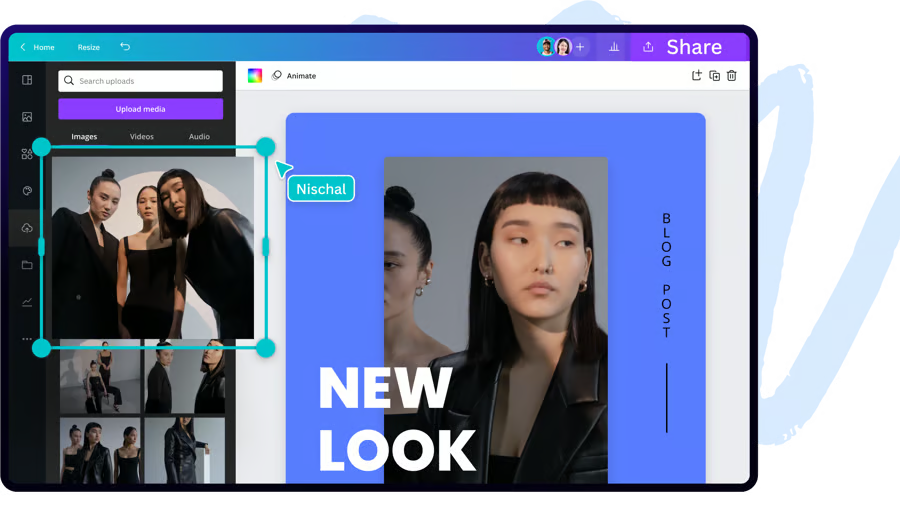
Canva removed the barrier between non-designers and professional-looking visuals. Before Canva, producing a polished graphic required either design software expertise or a freelance budget. Their drag-and-drop canvas, combined with a template library covering thousands of formats, means anyone can build a presentable social graphic, pitch deck slide, or event flyer in minutes.
Their Brand Kit feature lets teams store logos, color palettes, and font choices so every collaborator stays visually consistent. For teams producing general marketing collateral, this is a meaningful guardrail. The built-in Magic Write tool adds lightweight AI text generation, so users can draft a caption or headline without leaving the design canvas.
For companies that need one-off designs, occasional social graphics, or a central place for non-technical staff to produce on-brand materials, Canva delivers real value. It is a mature, well-documented design tool with a broad feature set and a large template ecosystem.
- Drag-and-drop canvas. Intuitive layout editor that requires no design software experience to produce clean, professional results.
- Massive template library. Thousands of pre-built templates covering social posts, presentations, ads, and print formats for immediate use.
- Brand Kit. Stores logos, colors, and fonts so collaborators apply the same visual identity across every design without manual setup.
- Basic content calendar and scheduling. Lets teams plan and publish posts to social channels from a single interface without a separate tool.
- Magic Write. Lightweight AI text generation for captions, headlines, and short copy directly inside the design canvas.
Where Canva Falls Short for Ad Creative Teams
Canva is a design tool, not an ad creative platform. That distinction matters when you are running paid campaigns at any meaningful volume. The gap shows up in three specific scenarios.
First, research. Before a growth team writes a single word of ad copy, they need to know what competitors are running, what angles are converting, and what formats dominate their category. Canva has no mechanism for this. You leave Canva, spend time in the Meta Ad Library or a third-party spy tool, take notes, and then come back to manually recreate what you found. There is no connection between competitive intelligence and the creative tool.
Second, brand voice. Canva's Brand Kit stores visual identity well but has no concept of tone or language style. Two people writing captions inside Canva will write differently. Magic Write generates generic text with no awareness of how your brand sounds. If you are running ads in four languages, enforcing a consistent voice across all of them in Canva requires manual review on every single asset.
Third, campaign structure. Canva operates at the level of individual assets. There is no concept of a campaign with multiple hook angles, format variants, and coordinated copy across formats. Building a proper A/B test with three hooks, each in square, portrait, and landscape, means manually creating nine separate designs with no systematic link between them.
- No competitor ad research. Canva has no ad library or competitor tracking, so research happens outside the tool and loses its connection to the creative workflow.
- No brand voice enforcement. Magic Write generates text without learning your tone, leading to inconsistent copy across campaigns and team members.
- No campaign-level thinking. Canva works asset by asset with no structure for managing hooks, angles, and format variants as a coordinated campaign.
- Manual resizing. Adapting one creative to Meta, LinkedIn, and TikTok formats requires duplicating and adjusting each design by hand.
- No ad quality feedback. Canva has no mechanism for scoring a creative against ad performance criteria or brand consistency standards.
Real-World Scenario: Launching a Paid Campaign
Imagine a growth marketer at a SaaS company needs to launch a Meta campaign for a new product feature. Here is how the same task plays out in each tool.
With Canva, the marketer opens the Meta Ad Library in a separate browser tab, manually scans competitor ads, takes notes, then returns to Canva to find a template, customize it to approximate brand colors, write copy from scratch, resize the design three times for different formats, and export each file individually. The full process takes a half day. The copy may or may not match the brand voice, depending on who wrote it.
With Adkumo, the marketer opens the Competitors tab, spots two high-performing rival ads, clicks Quick Remix, and Adkumo rewrites both ads in the brand's voice with platform-correct sizing already applied. The marketer adds a third hook angle from the AI campaign planner, reviews quality scores, and exports all nine format variants in one step. The full process takes under 30 minutes. Every piece of copy matches the brand voice because it was generated against the stored brand DNA.
The difference is not just speed. It is the gap between a design tool and an ad intelligence platform.
Adkumo vs Canva: Feature Comparison
| Funktion | Adkumo | Canva |
|---|---|---|
| Creative Production | ||
| AI Ad Creative GenerationGenerate complete ad sets from a goal or offer | ||
| Manual Visual Design ToolsDrag-and-drop canvas with layers and shapes | ||
| Template LibraryPre-built design templates for common formats | ||
| AI Copy GenerationGenerate hooks, headlines, and body copy | Basic | |
| Video Ad SupportGenerate or incorporate video ad formats | Basic | |
| Intelligence & Research | ||
| Competitor Ad RepositoryBrowse and monitor real competitor ads across platforms | ||
| RemixerTurn any winning ad into a brand-consistent variant | ||
| AI Ad Campaign PlanningPlan angles, hooks, and creative strategy with AI | ||
| Ad Quality ScoringAutomated scoring of creatives against brand and performance criteria | ||
| Brand Management | ||
| Brand Voice LearningAI learns and enforces your tone across every ad | ||
| Brand Kit (Colors, Fonts, Logo)Store and apply visual brand identity | ||
| Multi-Language Ad GenerationGenerate ads in EN, DE, FR, IT with brand voice | Manual | |
| Workflow & Export | ||
| Multi-Platform Ad ExportsPlatform-sized exports for Meta, Google, LinkedIn | ||
| Ad Campaign StructureOrganize creatives into campaign sets with hooks and variants | ||
| Basic Content SchedulingPlan and schedule posts to social channels | ||
Pricing Approach
Canva offers a free tier with limited storage and a Pro plan for individuals and teams that adds the Brand Kit, background remover, and content scheduler. For most teams, Canva Pro is the relevant comparison point.
Adkumo is priced for teams running paid advertising who need AI-powered creative generation, competitor research, and brand voice enforcement. These capabilities do not exist in Canva at any price tier. The relevant comparison is not Canva Pro versus Adkumo but the combined cost of Canva Pro plus a competitor spy tool plus a copywriting AI versus Adkumo as a single platform covering all three.
For teams spending money on paid ads, the cost-per-creative produced in Adkumo is significantly lower than assembling the same output manually across multiple tools. The time saving on research and resizing alone typically exceeds the subscription cost within the first month.
Who Should Choose Which Tool
Canva Is Sufficient If:
- Your primary need is manual visual design for general marketing collateral
- Basic social scheduling meets your publishing workflow
- You write your own copy or use simple AI assistance without brand voice requirements
- Ad creative velocity and competitor research are not priorities
- You have a small, consistent team producing a low volume of assets
Add Adkumo If:
- You need AI-generated ad creatives with consistent brand voice across every output
- Competitor ad research and remixing are part of your creative process
- You run campaigns across multiple formats and need them generated together
- Brand voice consistency across languages is critical to your ad strategy
- You want a single platform for research, generation, scoring, and export rather than four separate tools
How to Switch from Canva
Switching does not mean abandoning your Canva assets. Most teams run both tools for a period, moving ad creative work to Adkumo while keeping Canva for general design tasks. Here is a practical four-step migration for the ad creative side.
- Export your brand assets from Canva. Download your logo files, brand color values, and any font files you own. These go directly into the Adkumo asset library. The Brand Kit setup in Adkumo takes the same information Canva already has stored.
- Define your brand DNA in Adkumo. Beyond visual identity, Adkumo stores your brand voice: tone, style, personality, and what your brand avoids. Spend 20 minutes completing this profile. Every generated ad from this point forward reflects it automatically.
- Run your first campaign through Adkumo. Take an active campaign you would normally build in Canva and use the Adkumo campaign planner instead. Generate three hook angles, review quality scores, and export all format variants. Compare the time and output quality against your Canva baseline.
- Add competitor research to your workflow. Use the Competitors and Explore tabs before your next campaign brief. Identify what is performing in your category, remix the strongest examples into your brand, and use that intelligence to inform your hook angles before generating new creatives.
Why Teams Add Adkumo to Their Stack
Many teams discover that manual design cannot keep up with ad creative velocity once paid budgets scale. Canva handles the manual design side well. Adkumo handles the research, generation, and export of ad campaigns at scale. The two tools address different problems, and running both is a common setup for teams that need both general collateral and performance ad creatives.
- AI-generated copy and visuals that match brand voice without manual review on every asset
- Ad campaign planning that coordinates hooks, angles, and format variants as a single unit
- Competitor ad research integrated directly into the creative workflow, not handled in a separate tool
- Platform-specific export sizes generated automatically so no manual resizing is required
- Complete workflow from competitive research to launched ad campaign inside one platform
Häufig gestellte Fragen
Ready to Research, Remix, and Ship?
Competitor ad intel plus a brand-aware Remixer, no template hunting required.
Mehr entdecken
AI Ad Campaigns
See how Adkumo generates complete ad creative sets from a single goal
AI Social Media Posts
Generate on-brand copy for organic and paid social posts
All Adkumo Alternatives Compared
See how Adkumo stacks up against the tools marketers evaluate most
Ad Maker: Prompt to Finished Creative
Explore the full ad creative pipeline from prompt to export
Brand Voice AI
Learn how Adkumo learns and applies your brand tone at scale