%20--%3e%3csvg%20width='42mm'%20height='64mm'%20viewBox='0%200%2041.999999%2064.000001'%20version='1.1'%20id='svg1'%20xml:space='preserve'%20inkscape:version='1.4.4%20(dcaf3e7d9e,%202026-05-05)'%20sodipodi:docname='adkumo-cards-color.svg'%20xmlns:inkscape='http://www.inkscape.org/namespaces/inkscape'%20xmlns:sodipodi='http://sodipodi.sourceforge.net/DTD/sodipodi-0.dtd'%20xmlns='http://www.w3.org/2000/svg'%20xmlns:svg='http://www.w3.org/2000/svg'%3e%3csodipodi:namedview%20id='namedview1'%20pagecolor='%23ffffff'%20bordercolor='%23000000'%20borderopacity='0.25'%20inkscape:showpageshadow='2'%20inkscape:pageopacity='0.0'%20inkscape:pagecheckerboard='0'%20inkscape:deskcolor='%23d1d1d1'%20inkscape:document-units='mm'%20inkscape:zoom='1.4142136'%20inkscape:cx='57.275649'%20inkscape:cy='123.39013'%20inkscape:window-width='1854'%20inkscape:window-height='1011'%20inkscape:window-x='66'%20inkscape:window-y='32'%20inkscape:window-maximized='1'%20inkscape:current-layer='g6528'%20/%3e%3cdefs%20id='defs1'%20/%3e%3cg%20inkscape:label='Layer%201'%20inkscape:groupmode='layer'%20id='layer1'%20transform='translate(-223.82077,-58.584489)'%3e%3cg%20id='g6528'%20transform='translate(9.9863014,0.36985863)'%3e%3crect%20style='fill:%239a5bfd;fill-opacity:1;stroke-width:0.229954'%20id='rect1'%20width='20'%20height='20'%20x='213.83447'%20y='58.21463'%20ry='5'%20/%3e%3crect%20style='fill:%239a5bfd;fill-opacity:1;stroke-width:0.229953'%20id='rect1-8'%20width='20'%20height='20'%20x='235.83447'%20y='102.21463'%20ry='5'%20/%3e%3crect%20style='fill:%23fd3c80;fill-opacity:1;stroke-width:0.229953'%20id='rect1-1'%20width='20'%20height='20'%20x='213.83447'%20y='80.21463'%20ry='5'%20/%3e%3crect%20style='fill:%23fd8902;fill-opacity:1;stroke-width:0.229953'%20id='rect1-1-0'%20width='20'%20height='20'%20x='213.83447'%20y='102.21463'%20ry='5'%20/%3e%3crect%20style='fill:%2305e09b;fill-opacity:1;stroke-width:0.229953'%20id='rect1-1-6-7'%20width='20'%20height='20'%20x='235.83447'%20y='58.21463'%20ry='5'%20/%3e%3crect%20style='fill:%23307eeb;fill-opacity:1;stroke-width:0.229953'%20id='rect1-1-6-7-4'%20width='20'%20height='20'%20x='235.83447'%20y='80.21463'%20ry='5'%20/%3e%3c/g%3e%3c/g%3e%3c/svg%3e)
Repurpose One Ad or Make Ten New Ones? A Data-Backed Answer
Should you reformat a proven ad or brainstorm net-new concepts? Here is the rule of thumb and the math: squeeze winners hard, test net-new cheaply.
I get asked a version of this question on almost every engagement. A brand has one ad that is clearly carrying the account, and the team is split. Half of them want to ride the winner and spin it into every placement they can. The other half wants to brainstorm ten fresh concepts, because surely the next breakout idea is in there somewhere.
Both camps are partly right, and both can quietly waste a quarter of budget if they go too far. I am not affiliated with any one tool, I just sit with the spend and the spreadsheets. So here is the framework I actually use to decide, plus the math that makes the call for you.
Repurposing and net-new are two different jobs

It helps to separate the two activities, because people use the words loosely and then argue past each other.
- Repurposing. You keep a winning concept and change its wrapper. Same hook, same offer, same proof, but cut for a new placement, resized for a new ratio, or translated into a new language. The bet is low because the idea is already validated.
- Net-new concepts. You change the idea itself. A different angle, a different emotional hook, a different proof point. The bet is high because nothing about it is proven yet, but the upside is a new winner that resets your whole account.
Repurposing is how you harvest a winner. Net-new is how you find the next one. They are not competing strategies, they are two phases of the same loop, and the mistake is doing only one of them.
Squeeze the winner before you reinvent it
When a concept wins, most teams under-harvest it. They run the one format that won, watch it fatigue, and abandon the idea entirely when frequency climbs. That is leaving money on the table, because the idea was never the thing that fatigued. The specific execution was.
A single proven concept usually has far more life in it than one ad. Before I let a team build anything net-new, I make them exhaust the cheap, high-confidence variations of the winner:
- New placements. A feed ad recut as a Story or Reel, a square recut as vertical, a static turned into a simple motion version.
- New ratios. The same creative built for 1:1, 4:5, 9:16, and 16:9 so it stops getting auto-cropped into nonsense by the platform.
- New languages and markets. A proven hook translated and localized, which is often the single highest-ROI repurpose for any brand selling across borders.
- New hook framing. The same offer led with a different first three seconds, which is technically a small net-new test riding on a proven body.
Each of these is cheap to produce and highly likely to work, because you are varying the wrapper, not the bet. This is the boring, profitable work that quietly compounds. It is also worth knowing when the opposite is true, because past a point more variations start to hurt rather than help, and the trick is squeezing the wrapper without splintering your spend.
The math, because it makes the call for you
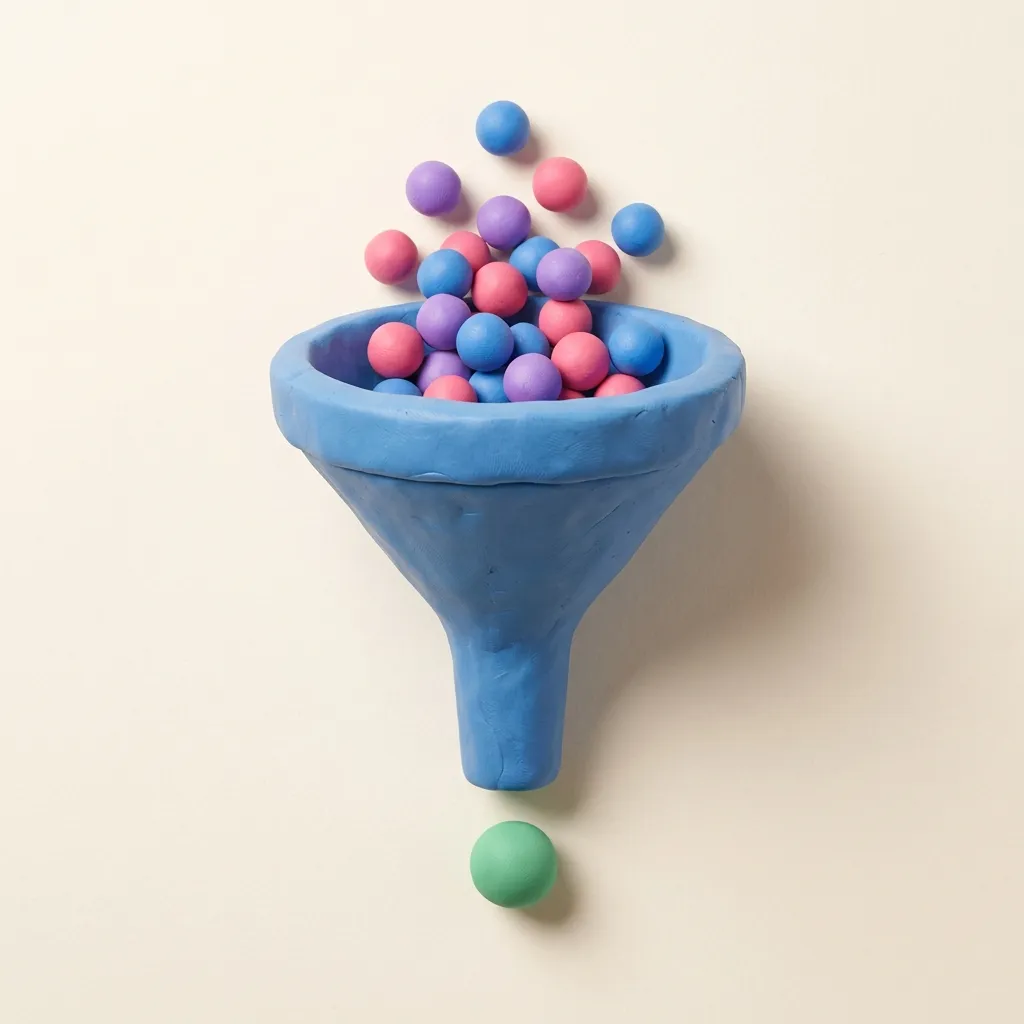
Here is the part that ends the meeting. Repurposing and net-new have completely different expected returns, and once you put rough numbers on them the priority is obvious.
Repurposing math. Say your winner returns a 3x ROAS and you have proven the concept. A reformatted version of it might land at 0.7 to 0.9 of the original performance, because you are not reinventing anything. So a repurpose has roughly a 70 to 90 percent chance of being a usable, profitable ad. Produce five of them and you can expect four to work. That is a near-guaranteed return on a tiny production cost.
Net-new math. The honest hit rate for genuinely new concepts is brutal. Across the accounts I have worked on, somewhere between one in five and one in ten net-new concepts beats the current control. So you might brainstorm ten ideas, produce them, and expect one or two to even be worth keeping, and maybe none to beat the incumbent.
Put those side by side. Five repurposes give you four reliable ads. Ten net-new concepts give you maybe one breakout and a lot of dead production. If the two cost the same to make, the repurposes win on expected value every single time. Net-new only wins when its breakouts are cheap enough to fund out of the surplus the repurposes generate.
A rule of thumb you can actually run
I do not want you doing portfolio theory before every campaign, so here is the heuristic I hand teams.
- Squeeze winners aggressively. The moment a concept proves out, generate every cheap variation of it first: placements, ratios, languages, and a couple of alternate hooks. Spend the bulk of your production budget here. This is your reliable base.
- Test net-new sparingly and cheaply. Reserve a slice, I usually say 20 to 30 percent, for genuinely new concepts. Keep each one cheap to produce, because you are paying for a lottery ticket, not a sure thing. The goal is volume of attempts, not polish, and there are ways to test new creative without torching the budget while you do it.
- Promote, then squeeze again. When a net-new concept does break out, it graduates. Now it becomes the new winner you squeeze aggressively, and the loop repeats.
The trap on both ends is real. Teams that only repurpose slowly starve as every winner eventually fatigues and they have no replacement in the pipeline. Teams that only chase net-new burn budget producing polished concepts that mostly miss, while ignoring the proven idea already printing money. The framework keeps you funding tomorrow without bankrupting today.
The real bottleneck is production, not strategy
Here is the uncomfortable thing I notice. Most teams already agree with the framework above in principle. They still do not follow it, and the reason is almost always production friction. Repurposing a winner into eight placements, four ratios, and three languages is twenty-something assets. If each one means a round-trip to a designer, nobody does it. The winner runs in one format until it dies.
That is the practical reason repurposing gets neglected even though the math screams for it. The expected value is enormous, but only if the variations are cheap and fast to produce. When they are slow, the whole strategy quietly collapses into whatever was easiest to make. The teams that win compress the whole thing into a tight, repeatable workflow so producing a fresh batch of placements is a habit, not a project.
This is where tooling earns its keep. If you want the production tax gone entirely, Adkumo is worth a look. It takes one proven ad and spins out the placements, ratios, and languages for you, all kept consistent with your brand DNA, then launches them to Meta and LinkedIn. It does not change the math, but it removes the friction that was stopping teams from acting on the math. When squeezing a winner costs you minutes instead of a design sprint, you finally do the profitable thing by default.
The bottom line
Repurpose first, and do it ruthlessly. A proven concept reformatted across placements, ratios, and languages is the highest-confidence, highest-ROI work in your account, and almost everyone under-does it. Reserve a small, cheap slice for net-new concepts, because that is the only way to find the next winner, and accept that most of those bets will miss.
So the answer to repurpose one ad or make ten new ones is usually neither extreme. Make ten versions of the one that works, run a couple of cheap new swings on the side, and let the math do the rest.