%20--%3e%3csvg%20width='42mm'%20height='64mm'%20viewBox='0%200%2041.999999%2064.000001'%20version='1.1'%20id='svg1'%20xml:space='preserve'%20inkscape:version='1.4.4%20(dcaf3e7d9e,%202026-05-05)'%20sodipodi:docname='adkumo-cards-color.svg'%20xmlns:inkscape='http://www.inkscape.org/namespaces/inkscape'%20xmlns:sodipodi='http://sodipodi.sourceforge.net/DTD/sodipodi-0.dtd'%20xmlns='http://www.w3.org/2000/svg'%20xmlns:svg='http://www.w3.org/2000/svg'%3e%3csodipodi:namedview%20id='namedview1'%20pagecolor='%23ffffff'%20bordercolor='%23000000'%20borderopacity='0.25'%20inkscape:showpageshadow='2'%20inkscape:pageopacity='0.0'%20inkscape:pagecheckerboard='0'%20inkscape:deskcolor='%23d1d1d1'%20inkscape:document-units='mm'%20inkscape:zoom='1.4142136'%20inkscape:cx='57.275649'%20inkscape:cy='123.39013'%20inkscape:window-width='1854'%20inkscape:window-height='1011'%20inkscape:window-x='66'%20inkscape:window-y='32'%20inkscape:window-maximized='1'%20inkscape:current-layer='g6528'%20/%3e%3cdefs%20id='defs1'%20/%3e%3cg%20inkscape:label='Layer%201'%20inkscape:groupmode='layer'%20id='layer1'%20transform='translate(-223.82077,-58.584489)'%3e%3cg%20id='g6528'%20transform='translate(9.9863014,0.36985863)'%3e%3crect%20style='fill:%239a5bfd;fill-opacity:1;stroke-width:0.229954'%20id='rect1'%20width='20'%20height='20'%20x='213.83447'%20y='58.21463'%20ry='5'%20/%3e%3crect%20style='fill:%239a5bfd;fill-opacity:1;stroke-width:0.229953'%20id='rect1-8'%20width='20'%20height='20'%20x='235.83447'%20y='102.21463'%20ry='5'%20/%3e%3crect%20style='fill:%23fd3c80;fill-opacity:1;stroke-width:0.229953'%20id='rect1-1'%20width='20'%20height='20'%20x='213.83447'%20y='80.21463'%20ry='5'%20/%3e%3crect%20style='fill:%23fd8902;fill-opacity:1;stroke-width:0.229953'%20id='rect1-1-0'%20width='20'%20height='20'%20x='213.83447'%20y='102.21463'%20ry='5'%20/%3e%3crect%20style='fill:%2305e09b;fill-opacity:1;stroke-width:0.229953'%20id='rect1-1-6-7'%20width='20'%20height='20'%20x='235.83447'%20y='58.21463'%20ry='5'%20/%3e%3crect%20style='fill:%23307eeb;fill-opacity:1;stroke-width:0.229953'%20id='rect1-1-6-7-4'%20width='20'%20height='20'%20x='235.83447'%20y='80.21463'%20ry='5'%20/%3e%3c/g%3e%3c/g%3e%3c/svg%3e)
How to Build a Swipe File That Actually Improves Your Ads
A practical guide to building a swipe file that improves your ads: where to source proven ads, how to tag and organize them, and how to brief from it.
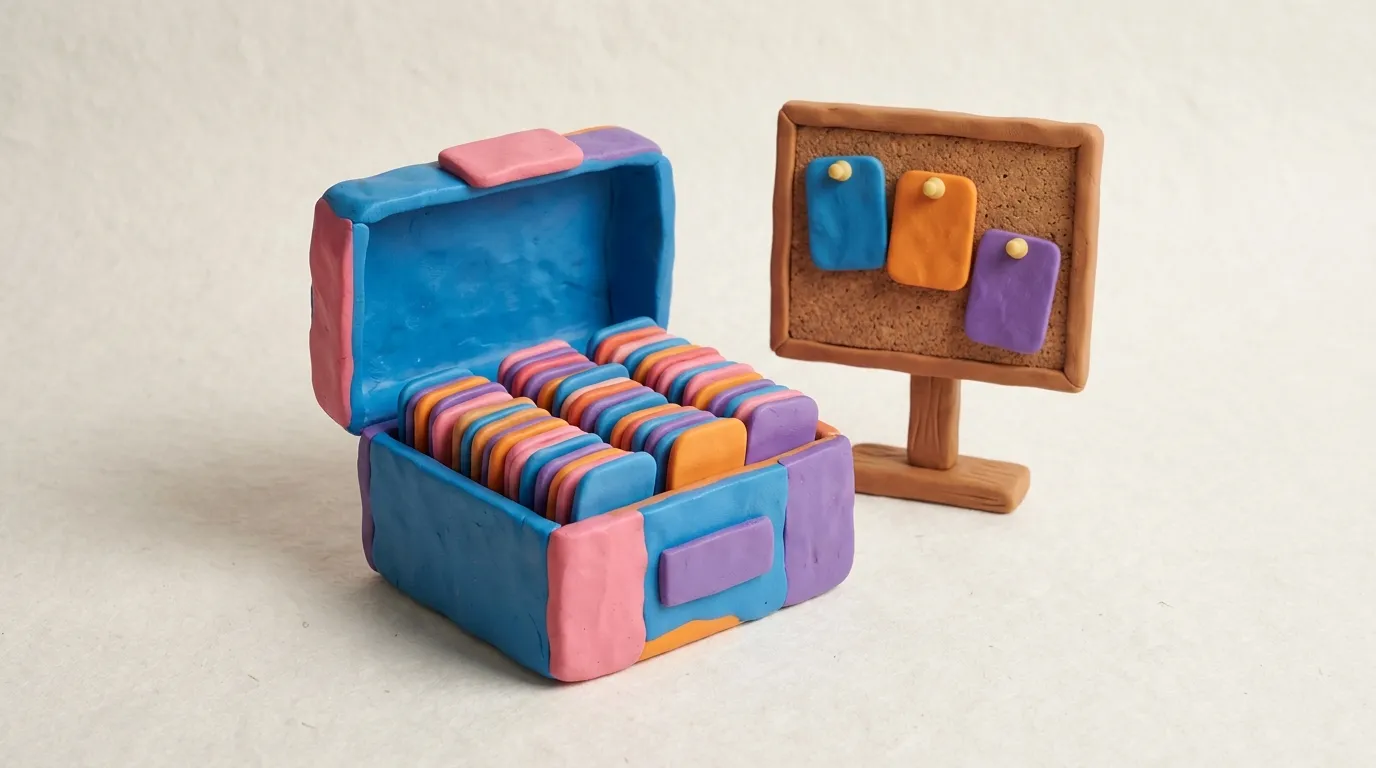
Most marketers I work with already collect ads. They screenshot a competitor, bookmark a clever LinkedIn post, drop a link in a Slack channel that nobody ever reopens. That is not a swipe file. That is a graveyard. A swipe file only earns its name when it changes what you ship, and almost none of them do.
I have spent years helping growth teams turn scattered inspiration into a system they actually pull from. The difference between a hoard and a swipe file is not how many ads you save. It is how deliberately you capture them, how you tag them, and whether you can find the right reference at the exact moment you sit down to brief a new ad. Here is how to build one that survives contact with a real production calendar.
Why most swipe files fail

The failure mode is always the same. You save things in the moment, with no structure, and the pile grows faster than your ability to make sense of it. Three months later you have four hundred saved ads and zero idea which one to look at when the brief lands. So you do what you always did and start from a blank page anyway.
A swipe file that works avoids three specific traps:
- No why. You saved the ad but not the reason. Six weeks on you cannot remember whether it was the hook, the offer, or the layout that stopped you.
- No structure. Everything lands in one undifferentiated bucket, so retrieval is a scroll, not a search.
- No use. It is never wired into the moment you actually create, so it stays a museum instead of a toolkit.
Fix those three and the rest is mechanical. Let us go in order: where to source, how to organize, how to extract patterns, and how to brief from it.
Where to source proven ads
The best swipe file is built from ads that have already survived a budget, not from whatever crossed your feed. Proven beats pretty. These are the sources I lean on, roughly in order of signal quality.
- Meta Ad Library. The single richest free source. Every active ad on Facebook and Instagram is searchable by brand. If a competitor has been running the same creative for two months, that is a tested winner, not a fluke. Filter by their page and watch what they keep alive.
- LinkedIn Ad Library. Underused and excellent for B2B. You can see exactly what tone, offer, and format land for the companies you compete with for the same buyer. A close read of a single competitor, like this LinkedIn ads teardown, often surfaces more usable structure than a hundred random saves.
- TikTok Creative Center and the TikTok ad library. The place to study short-form, native, scroll-stopping video structure even if you never run a TikTok ad.
- Dedicated swipe tools. Foreplay, Atria, and similar libraries aggregate millions of ads with one-click saving. Worth it once your volume justifies the subscription.
- Your own winners. The most overlooked source of all. The ad that already worked for you is the strongest reference you own, and often your best ad already exists somewhere in your account. Save your top performers with the same rigor you save a competitor's.
A rule I hold to. Save longevity, not novelty. A brand-new ad tells you someone tried something. An ad that has been live for ninety days tells you it worked.
How to tag and organize
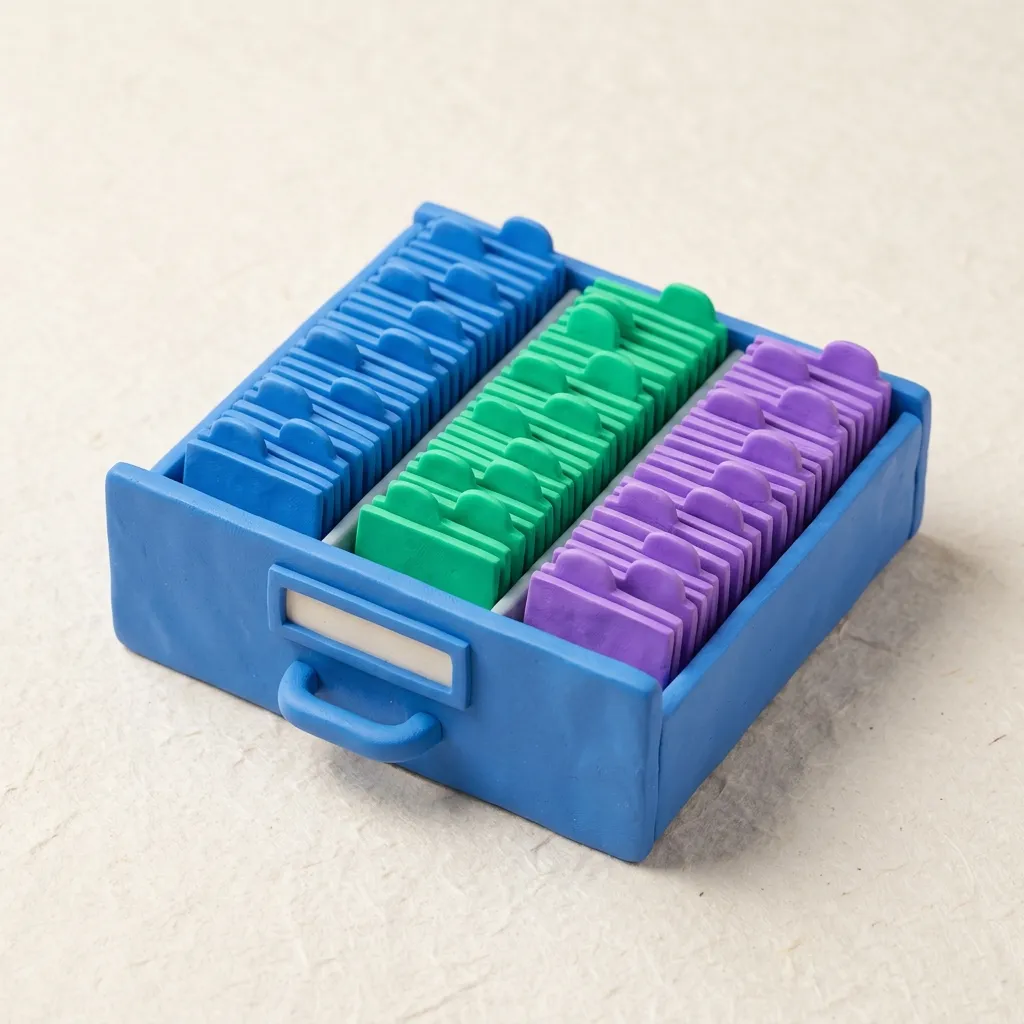
Tooling matters less than discipline. Notion, Airtable, a dedicated swipe app, even a tidy folder structure all work. What matters is that every saved ad carries enough metadata to be retrievable by intent. Tag along these axes:
- Format. Static, carousel, video, UGC, meme, testimonial. This is the first thing you filter on when a brief specifies a placement.
- Funnel stage. Cold awareness, consideration, retargeting. A hook that works on a stranger is wrong for someone who already abandoned a cart.
- Mechanism. What is the ad actually doing. Problem-agitation, social proof, bold offer, founder story, comparison. This is the tag you will reach for most.
- Angle. The specific emotional or rational promise. Save time, save money, avoid embarrassment, belong to a group.
And the field that separates a swipe file from a folder. A one-line note on why you saved it. Write it the moment you save, while the reaction is fresh. Why I saved this. The hook reframes the price as a daily coffee. Three words and you have made the ad usable a year from now.
How to extract patterns, not just collect
Collecting is the easy part. The value compounds when you start seeing across the file instead of one ad at a time. Once a month, sit with the file and look for repetition.
- Recurring hooks. If five unrelated brands all open with a number in the first three words, that is a pattern, not a coincidence. Patterns are reusable. Individual ads are not.
- Structural skeletons. Strip an ad down to its bones. Hook, then problem, then proof, then offer, then call to action. The skeleton transfers to your brand even when the words do not.
- What you cannot copy. Note the brand-specific stuff, the exact voice, the logo, the photography, so you remember to replace it rather than imitate it. You are stealing the structure, never the skin.
The goal is a small private library of mechanisms you trust. Not four hundred ads, but fifteen proven structures you can deploy on demand.
How to brief from your swipe file
Here is where most files die and the good ones earn their keep. The swipe file should be the first thing open when you start a new ad, not an afterthought you consult never.
When a brief lands, filter the file by the format and funnel stage you need, pull two or three references whose mechanism fits the goal, and write the brief around the skeleton rather than the surface. The reference is the structure. Your job is to pour your brand, your offer, and your voice into a frame that already works. That is not derivative. That is how every good creative team has always worked, with a wall of references in plain sight.
Do this for a quarter and the blank page stops being a problem. Once you stop writing ads from scratch, every brief starts from a proven shape, and your hit rate climbs because you stopped guessing.
Where Adkumo fits
A swipe file is step one, and for years step one was where the momentum died. You would find the perfect proven ad, admire it, then face the long manual slog of rebuilding it on-brand and getting it live. The reference and the launched ad lived in two different worlds.
That is the gap Adkumo closes. It pairs a curated repository of proven ads with one-click adoption: you find a structure that works, click once, and Adkumo rebuilds it with your colors, your voice, and your brand DNA, generates variations across formats and languages, and launches the finished ad straight to Meta and LinkedIn. The swipe file stops being a place you look and becomes a place you launch from. When you are curious how that loop feels in practice, Adkumo is open to wander through.
Either way, build the file. The teams that consistently ship good ads are not more creative than you. They just never start from nothing.