%20--%3e%3csvg%20width='42mm'%20height='64mm'%20viewBox='0%200%2041.999999%2064.000001'%20version='1.1'%20id='svg1'%20xml:space='preserve'%20inkscape:version='1.4.4%20(dcaf3e7d9e,%202026-05-05)'%20sodipodi:docname='adkumo-cards-color.svg'%20xmlns:inkscape='http://www.inkscape.org/namespaces/inkscape'%20xmlns:sodipodi='http://sodipodi.sourceforge.net/DTD/sodipodi-0.dtd'%20xmlns='http://www.w3.org/2000/svg'%20xmlns:svg='http://www.w3.org/2000/svg'%3e%3csodipodi:namedview%20id='namedview1'%20pagecolor='%23ffffff'%20bordercolor='%23000000'%20borderopacity='0.25'%20inkscape:showpageshadow='2'%20inkscape:pageopacity='0.0'%20inkscape:pagecheckerboard='0'%20inkscape:deskcolor='%23d1d1d1'%20inkscape:document-units='mm'%20inkscape:zoom='1.4142136'%20inkscape:cx='57.275649'%20inkscape:cy='123.39013'%20inkscape:window-width='1854'%20inkscape:window-height='1011'%20inkscape:window-x='66'%20inkscape:window-y='32'%20inkscape:window-maximized='1'%20inkscape:current-layer='g6528'%20/%3e%3cdefs%20id='defs1'%20/%3e%3cg%20inkscape:label='Layer%201'%20inkscape:groupmode='layer'%20id='layer1'%20transform='translate(-223.82077,-58.584489)'%3e%3cg%20id='g6528'%20transform='translate(9.9863014,0.36985863)'%3e%3crect%20style='fill:%239a5bfd;fill-opacity:1;stroke-width:0.229954'%20id='rect1'%20width='20'%20height='20'%20x='213.83447'%20y='58.21463'%20ry='5'%20/%3e%3crect%20style='fill:%239a5bfd;fill-opacity:1;stroke-width:0.229953'%20id='rect1-8'%20width='20'%20height='20'%20x='235.83447'%20y='102.21463'%20ry='5'%20/%3e%3crect%20style='fill:%23fd3c80;fill-opacity:1;stroke-width:0.229953'%20id='rect1-1'%20width='20'%20height='20'%20x='213.83447'%20y='80.21463'%20ry='5'%20/%3e%3crect%20style='fill:%23fd8902;fill-opacity:1;stroke-width:0.229953'%20id='rect1-1-0'%20width='20'%20height='20'%20x='213.83447'%20y='102.21463'%20ry='5'%20/%3e%3crect%20style='fill:%2305e09b;fill-opacity:1;stroke-width:0.229953'%20id='rect1-1-6-7'%20width='20'%20height='20'%20x='235.83447'%20y='58.21463'%20ry='5'%20/%3e%3crect%20style='fill:%23307eeb;fill-opacity:1;stroke-width:0.229953'%20id='rect1-1-6-7-4'%20width='20'%20height='20'%20x='235.83447'%20y='80.21463'%20ry='5'%20/%3e%3c/g%3e%3c/g%3e%3c/svg%3e)
The Best AdCreative.ai Alternatives in 2026 (An Honest Breakdown)
Looking for an AdCreative.ai alternative? I broke down 5 AI ad tools, what each is genuinely best for, and where Adkumo fits: browse proven ads and launch to Meta and LinkedIn.

I talk to a lot of founders and marketers, and AdCreative.ai comes up in almost every conversation about ad tooling. It is one of the most popular AI ad generators on the market, and for good reason. But the same people who praise it are usually the ones quietly shopping for something else.
When I dig into why, it almost always comes down to one of three things:
- Creative that does not feel generic. AI variations are fast, but they start to look like everyone else's AI variations.
- Pricing that does not punish you for using it. Credit meters have a way of turning "unlimited creativity" into a monthly anxiety.
- More than just banners. People want video, social-native formats, and a way to actually get the ad live without five other tools.
So I did the thing a founder probably should not do: I researched my own competitors honestly. Below are the five tools I would genuinely point someone to in 2026, what each one is actually best at, and where my own product, Adkumo, fits. I built Adkumo, so I am biased. I will be straight with you about where the others win anyway.
How I evaluated these
"Best" is meaningless without a yardstick, so here is mine. I looked at each tool through five lenses that matter once real budget is on the line:
- Creative quality. Does it produce ads a human would actually run, or just plausible-looking filler?
- Brand consistency. Does it stay on your colors, voice, and style, or reset to generic on every generation?
- Where it starts. Does it start from a blank prompt, or from ads that are already proven to work?
- Formats. Static, video, social-native, multi-size, multi-language.
- Where it ends. Can you launch to your actual channels, Meta and LinkedIn, without exporting and re-uploading somewhere else?
That last one is where most of these tools quietly fall short, and it is worth keeping in mind as you read.
Adkumo: best overall for proven-ad-to-launch
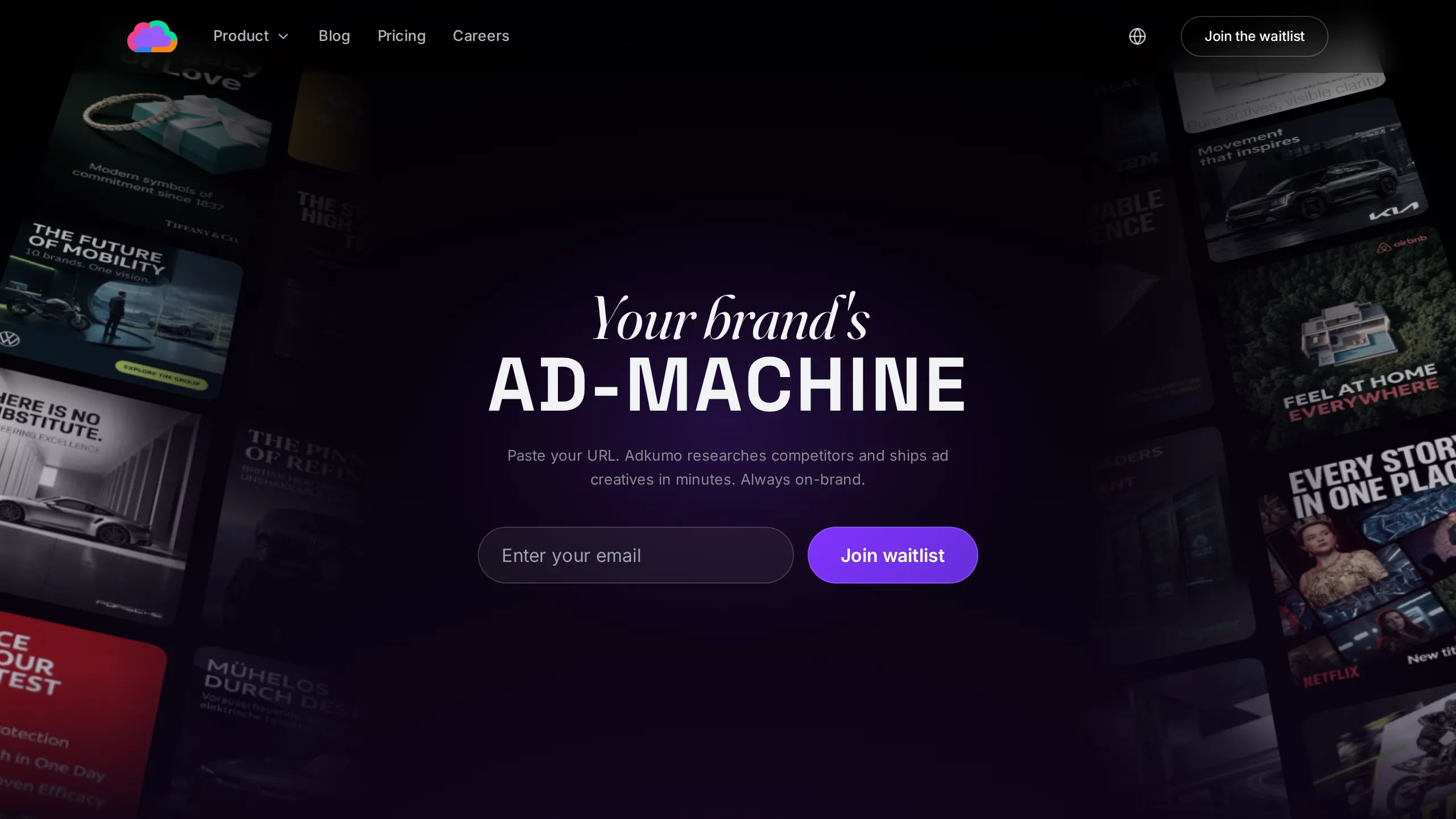
I will start with my own, then spend the rest of the post telling you when to pick someone else. Adkumo takes a different starting point than every generator on this list. Instead of a blank prompt, you browse a curated repository of real ads that are already running and already working. You find a structure you like, click once to adopt it to your brand, and Adkumo rebuilds it with your colors, your voice, and your brand DNA.
From there you refine the copy and visuals in a chat, generate variations across formats and languages, and launch the finished ad directly to Meta Ads and LinkedIn Ads. The whole loop, from inspiration to a live campaign, happens in one place.
Best for. Founders, performance marketers, and lean teams who want proven-pattern creative on-brand and live, without a designer and without tool-hopping.
Where it wins. It is the only tool here that bridges all three steps, find a proven ad, make it yours, and launch it. It is also the only one in this roundup that publishes to LinkedIn, not just Meta. Brand consistency is enforced rather than hoped for, because every adoption runs through your brand DNA.
Where it does not. Adkumo is newer than the incumbents, and the repository-first workflow is a different mental model. If you are wedded to typing a blank prompt and generating from nothing, it takes a beat to adjust. The payoff is that you stop starting from scratch.
AdCreative.ai: the incumbent you are comparing against
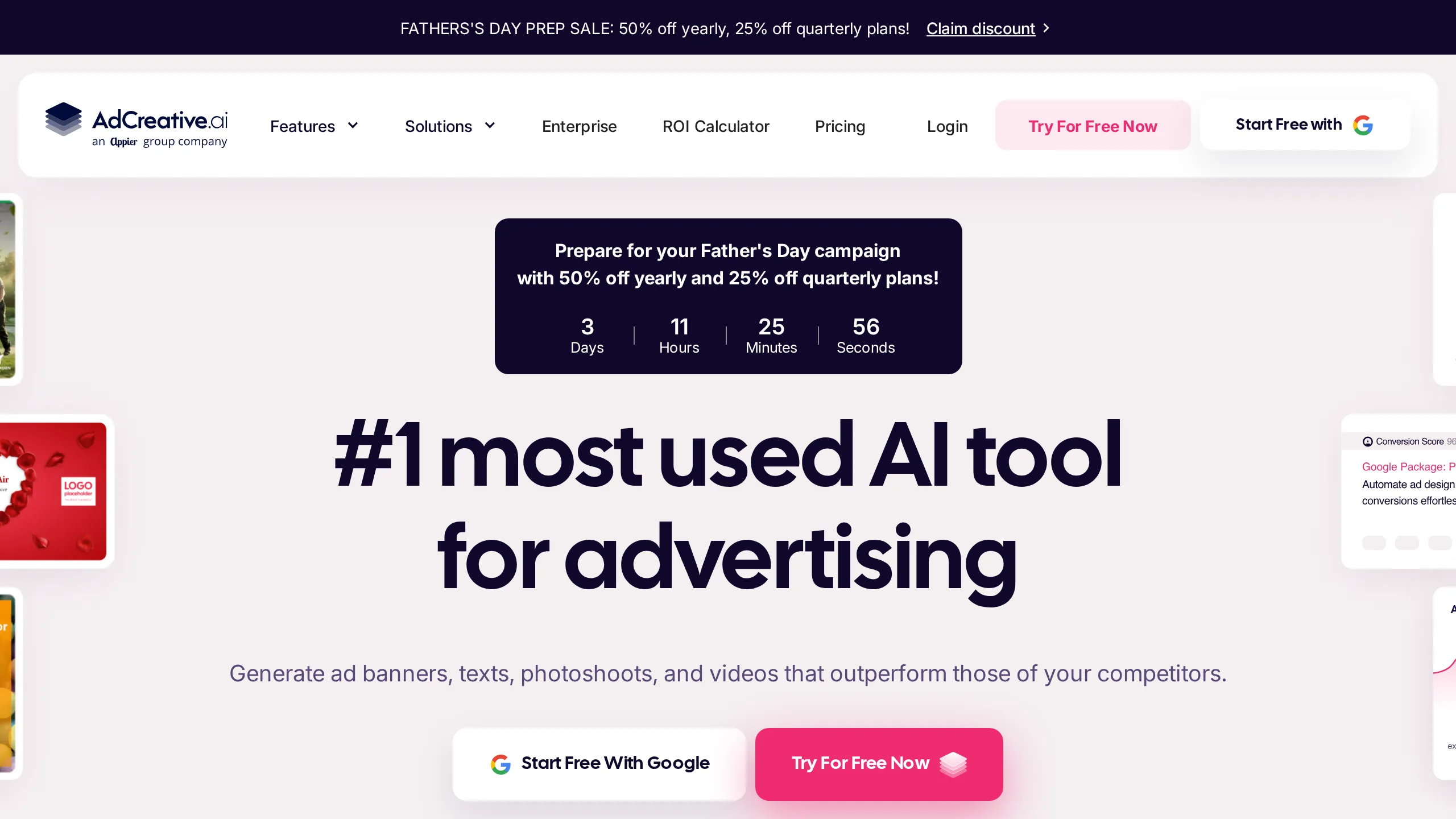
Credit where it is due. AdCreative.ai calls itself "the #1 most used AI tool for advertising," and the popularity is earned. It spits out ad banners, headlines, product photoshoots, and short videos at volume, scores each one with a predicted "Conversion Score," and pushes finished creatives straight to Meta and Google Ads. For a solo marketer who needs twenty banner variants before lunch, it is genuinely useful.
Best for. High-volume bulk generation of static and banner ads, especially if you only run Meta and Google and you like having a performance score on each asset.
Where it struggles. Two things come up constantly. The outputs trend template-y and repetitive once you have seen a few hundred of them. And the billing has a reputation: it is credit-based, where credits are essentially downloads, and the public ratings tell the story, roughly 4.3 on G2 against about 3.6 on Trustpilot across thousands of reviews, with the gap driven largely by surprise-charge and refund complaints. Entry pricing starts around 39 dollars a month and climbs quickly with usage. There is also no LinkedIn launch path and no concept of starting from a proven ad.
Foreplay: best for proven-ad inspiration
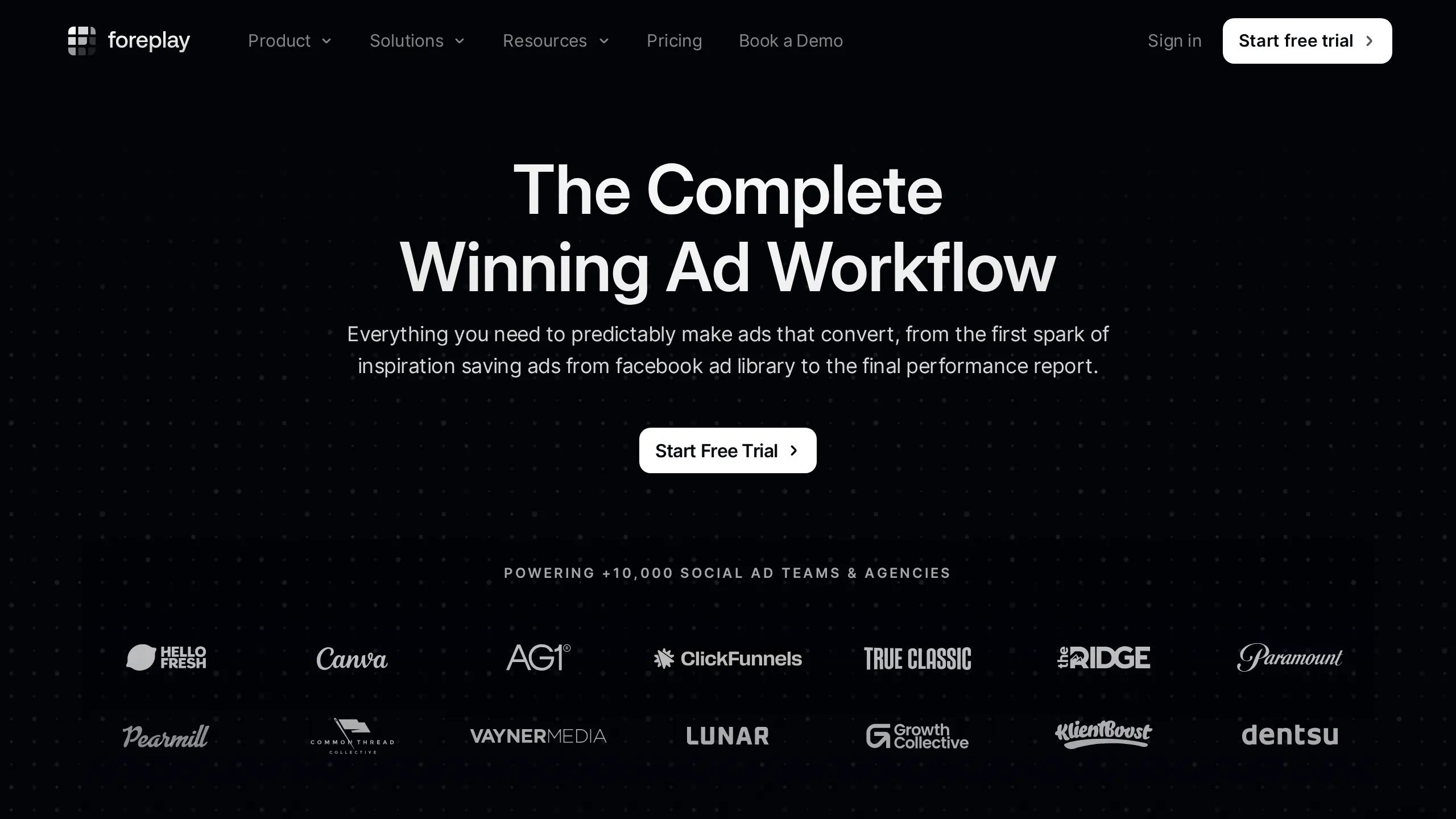
Foreplay is the tool I recommend most often for the part of the job that comes before generation. It is a massive, well-organized swipe file, more than ten million ads from over two hundred thousand brands, with one-click saving from the Facebook, TikTok, and LinkedIn ad libraries. If you have never kept one, my walkthrough on how to build a swipe file covers what to save and why before you spend a cent on a tool like this. Its Spyder feature tracks competitors, Lens analyzes creative, and Briefs turn a pile of reference ads into a clean creative direction for whoever produces the work.
Best for. Performance marketers and creative strategists who want a serious library of proven ads to study, organize, and brief from.
The honest catch. Foreplay is research and inspiration only. It does not generate on-brand creatives and it does not launch anything. You find the winning ad, then you take it somewhere else to build and ship it. That gap, between finding a proven ad and having a launched on-brand version of it, is exactly the gap Adkumo was built to close, and it is the whole reason I argue that your best ad already exists. Pricing starts around 49 dollars a month annually for a single seat and rises into the hundreds for teams, which is the other common complaint: it is loved, but it is not cheap. Reviewers rate it highly, around 4.8 on G2.
Canva Magic Studio: best for flexible DIY design
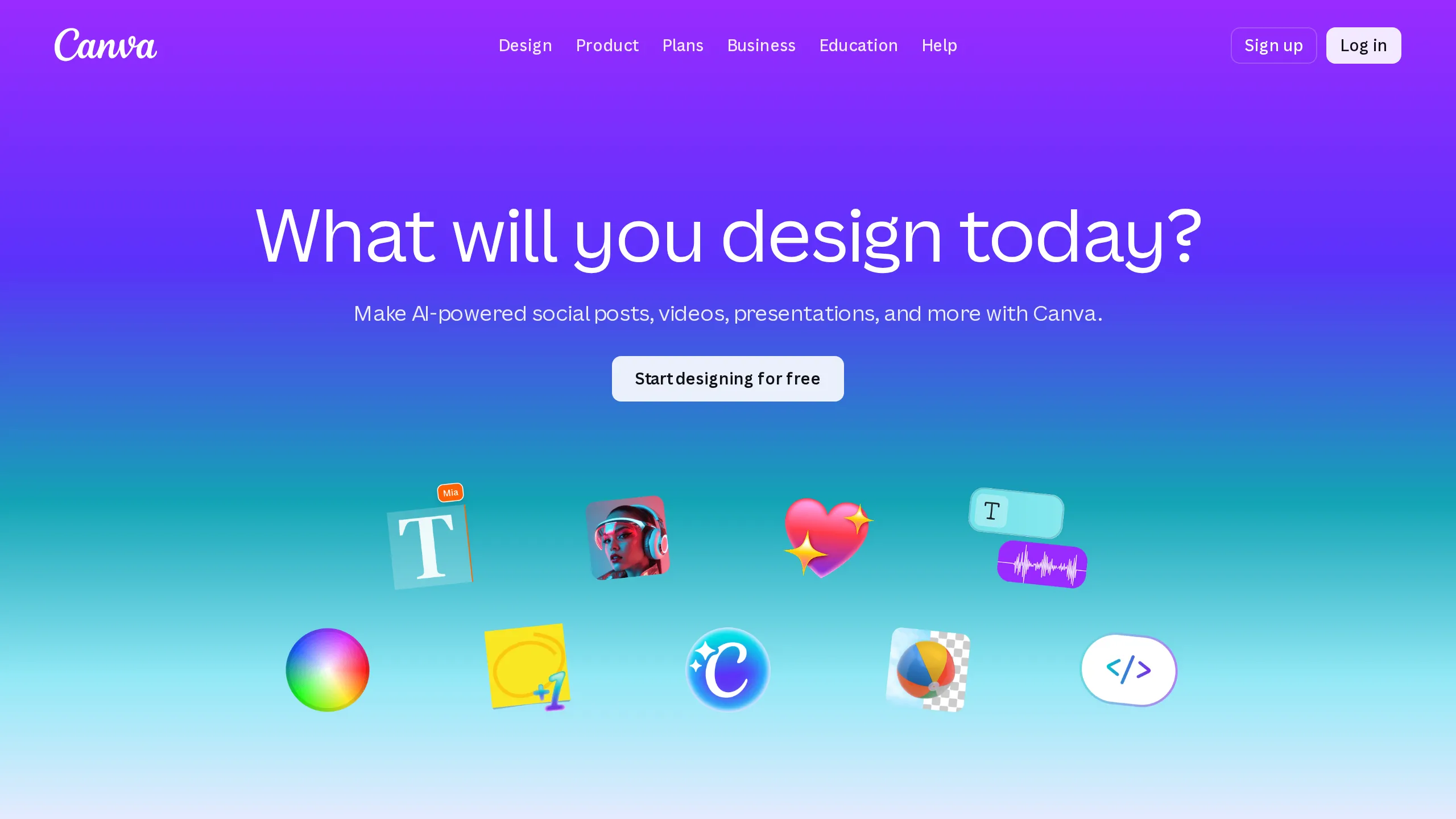
Canva is not really an ad tool, and that is the point. It is the most approachable design suite on the planet, and its Magic Studio layer adds AI on top: Magic Design for layouts, Magic Write for copy, Magic Media for images and video, plus a Brand Hub that keeps your logos, colors, and fonts in one place. If you need to make a deck, a social post, and an ad in the same afternoon, nothing beats it for sheer flexibility.
Best for. Solopreneurs and small teams who want one affordable, easy tool for every kind of visual, not just ads, and who are weighing whether they even need a designer to run ads. There is a real free tier, and Pro is about 15 dollars a month.
Where it falls down for ads. It was not built for ad performance. There is no conversion scoring, no library of proven ads to start from, and no native way to launch to Meta or LinkedIn, you export and upload manually. The AI output is convenient but generic, and while G2 and Capterra scores are excellent around 4.7, its Trustpilot sits much lower around 2.3, mostly on billing and support gripes. Great design tool, not a paid-social engine.
Creatify.ai: best for quick AI video ads
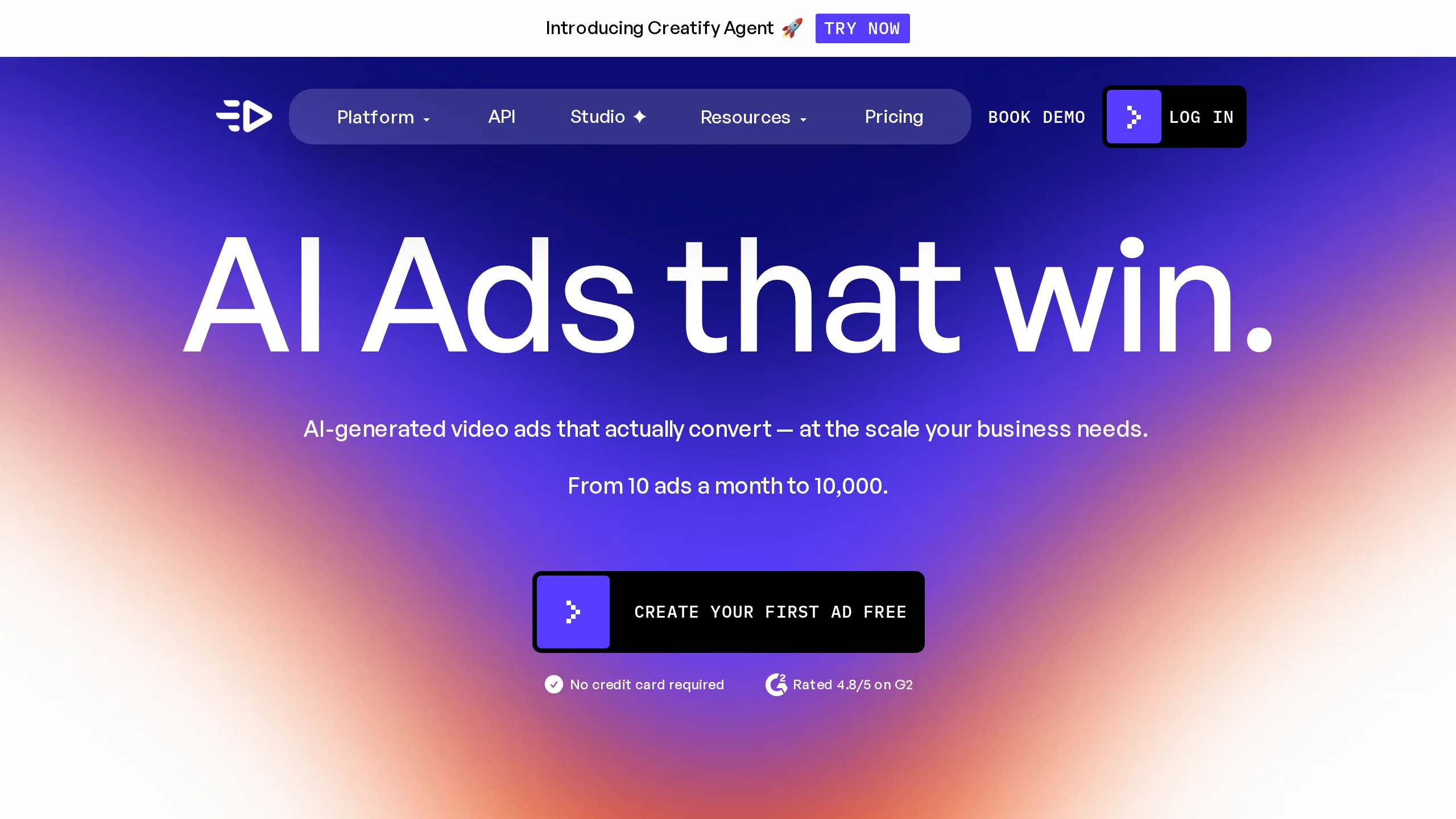
If your strategy is short-form video, Creatify is the most direct path I have found. You paste a product URL or description and it generates video ads complete with AI avatars, captions, and overlays, with more than fifteen hundred avatars and support for over seventy languages. You can batch out variations, run built-in A/B tests, watch competitors, and launch straight to Meta and TikTok.
Best for. Dropshippers, e-commerce stores, and anyone who needs UGC-style video ads fast without filming a thing.
The trade-offs. It is video-only, so it does nothing for the static and social-native side of your mix, and there is no proven-ad-adoption workflow. Credit consumption is opaque and burns faster than you expect, which shows up in the refund complaints on its reviews despite a respectable Trustpilot around 4. Pricing starts free with limited credits, then roughly 33 dollars a month for Starter and 49 for Pro. And like most of this list, there is no LinkedIn launch.
Pencil: best for enterprise and agency performance creative
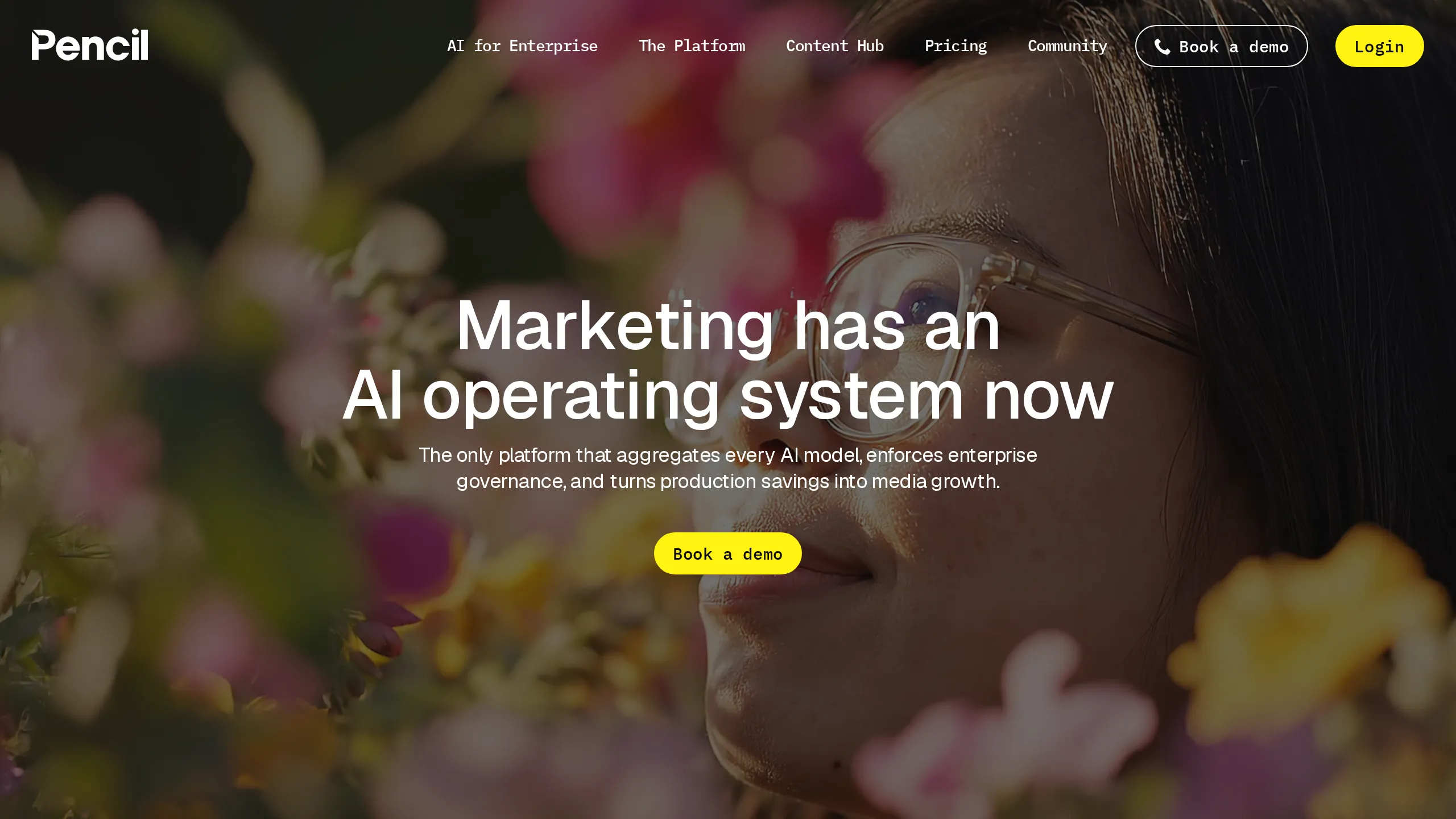
Pencil has moved decisively up-market. It now bills itself as "an AI operating system for marketing," orchestrating many underlying models, generating large volumes of video and static variants, and scoring them with a predictive engine trained on more than a billion dollars of ad spend. Wrapped around all of it is serious enterprise governance: SOC 2 Type II, role-based access, brand-safety guardrails, and IP indemnification.
Best for. Enterprise marketing teams and agencies that need predictive scoring, multi-model flexibility, and compliance at scale.
Why it is probably not for you. If you are a single brand or a lean team, Pencil is overkill, and its real power sits behind a sales-gated Pro tier with committed consumption pricing. The self-serve tiers people quote, around 14 to 55 dollars a month, look like remnants of its earlier life as a straightforward ad generator. Its G2 score is a glowing 4.8, but on a very small sample of about fourteen reviews, so weigh it accordingly. And like the rest, there is no curated library of proven ads to start from.
The side-by-side
Same tools, one table. "Starts from proven ads" and the two launch columns are the ones I would not compromise on.
| Tool | Best for | Starts from proven ads | Brand-consistent output | Launches to Meta | Launches to LinkedIn | Entry price | Public rating |
|---|---|---|---|---|---|---|---|
| Adkumo | Proven ad to on-brand launch | Yes | Yes | Yes | Yes | Early access | New |
| AdCreative.ai | Bulk static and banner generation | No | Partial | Yes | No | ~$39/mo | G2 4.3 / TP 3.6 |
| Foreplay | Finding and briefing proven ads | Yes | No | No | No | ~$49/mo | G2 4.8 |
| Canva | Flexible DIY design for everything | No | Yes | No | No | Free / ~$15/mo | G2 4.7 / TP 2.3 |
| Creatify.ai | Quick AI video ads | No | Limited | Yes | No | Free / ~$33/mo | TP ~4 |
| Pencil | Enterprise performance creative | No | Yes | Yes | Not emphasized | ~$14/mo+ | G2 4.8 (small sample) |
Which one should you actually pick?
The honest answer is that it depends on your workflow, not on which tool has the best demo.
- You want to start from proven ads and launch to Meta and LinkedIn in one place. Adkumo.
- You need bulk static and banner variants with a performance score, and you only run Meta and Google. AdCreative.ai.
- You just want a great swipe file to find and brief winning ads, and you will produce them elsewhere. Foreplay.
- You want one cheap, flexible tool for every kind of design, not only ads. Canva.
- You want quick UGC-style video ads from a product URL. Creatify.ai.
- You are an enterprise or agency that needs governance and predictive scoring at scale. Pencil.
The bottom line
There is no single best AdCreative.ai alternative, only the best one for how you actually work. Foreplay is where you find proven ads. AdCreative.ai, Canva, and Creatify are where you make ads from scratch. Pencil is where enterprises run the whole machine.
Adkumo is the one that connects those dots: find a proven ad, adopt it on-brand, and launch it to Meta and LinkedIn without leaving the tool. If that is the loop you have been stitching together by hand, that is exactly the gap I built it to close. Come browse the repository and see what your next ad could look like.