%20--%3e%3csvg%20width='42mm'%20height='64mm'%20viewBox='0%200%2041.999999%2064.000001'%20version='1.1'%20id='svg1'%20xml:space='preserve'%20inkscape:version='1.4.4%20(dcaf3e7d9e,%202026-05-05)'%20sodipodi:docname='adkumo-cards-color.svg'%20xmlns:inkscape='http://www.inkscape.org/namespaces/inkscape'%20xmlns:sodipodi='http://sodipodi.sourceforge.net/DTD/sodipodi-0.dtd'%20xmlns='http://www.w3.org/2000/svg'%20xmlns:svg='http://www.w3.org/2000/svg'%3e%3csodipodi:namedview%20id='namedview1'%20pagecolor='%23ffffff'%20bordercolor='%23000000'%20borderopacity='0.25'%20inkscape:showpageshadow='2'%20inkscape:pageopacity='0.0'%20inkscape:pagecheckerboard='0'%20inkscape:deskcolor='%23d1d1d1'%20inkscape:document-units='mm'%20inkscape:zoom='1.4142136'%20inkscape:cx='57.275649'%20inkscape:cy='123.39013'%20inkscape:window-width='1854'%20inkscape:window-height='1011'%20inkscape:window-x='66'%20inkscape:window-y='32'%20inkscape:window-maximized='1'%20inkscape:current-layer='g6528'%20/%3e%3cdefs%20id='defs1'%20/%3e%3cg%20inkscape:label='Layer%201'%20inkscape:groupmode='layer'%20id='layer1'%20transform='translate(-223.82077,-58.584489)'%3e%3cg%20id='g6528'%20transform='translate(9.9863014,0.36985863)'%3e%3crect%20style='fill:%239a5bfd;fill-opacity:1;stroke-width:0.229954'%20id='rect1'%20width='20'%20height='20'%20x='213.83447'%20y='58.21463'%20ry='5'%20/%3e%3crect%20style='fill:%239a5bfd;fill-opacity:1;stroke-width:0.229953'%20id='rect1-8'%20width='20'%20height='20'%20x='235.83447'%20y='102.21463'%20ry='5'%20/%3e%3crect%20style='fill:%23fd3c80;fill-opacity:1;stroke-width:0.229953'%20id='rect1-1'%20width='20'%20height='20'%20x='213.83447'%20y='80.21463'%20ry='5'%20/%3e%3crect%20style='fill:%23fd8902;fill-opacity:1;stroke-width:0.229953'%20id='rect1-1-0'%20width='20'%20height='20'%20x='213.83447'%20y='102.21463'%20ry='5'%20/%3e%3crect%20style='fill:%2305e09b;fill-opacity:1;stroke-width:0.229953'%20id='rect1-1-6-7'%20width='20'%20height='20'%20x='235.83447'%20y='58.21463'%20ry='5'%20/%3e%3crect%20style='fill:%23307eeb;fill-opacity:1;stroke-width:0.229953'%20id='rect1-1-6-7-4'%20width='20'%20height='20'%20x='235.83447'%20y='80.21463'%20ry='5'%20/%3e%3c/g%3e%3c/g%3e%3c/svg%3e)
Running Ads for a B2B SaaS? Steal This Creative Playbook
A practical B2B SaaS ad creative playbook: the angles that win, formats that work on LinkedIn and Meta, social proof, the right offer, and a simple creative system.
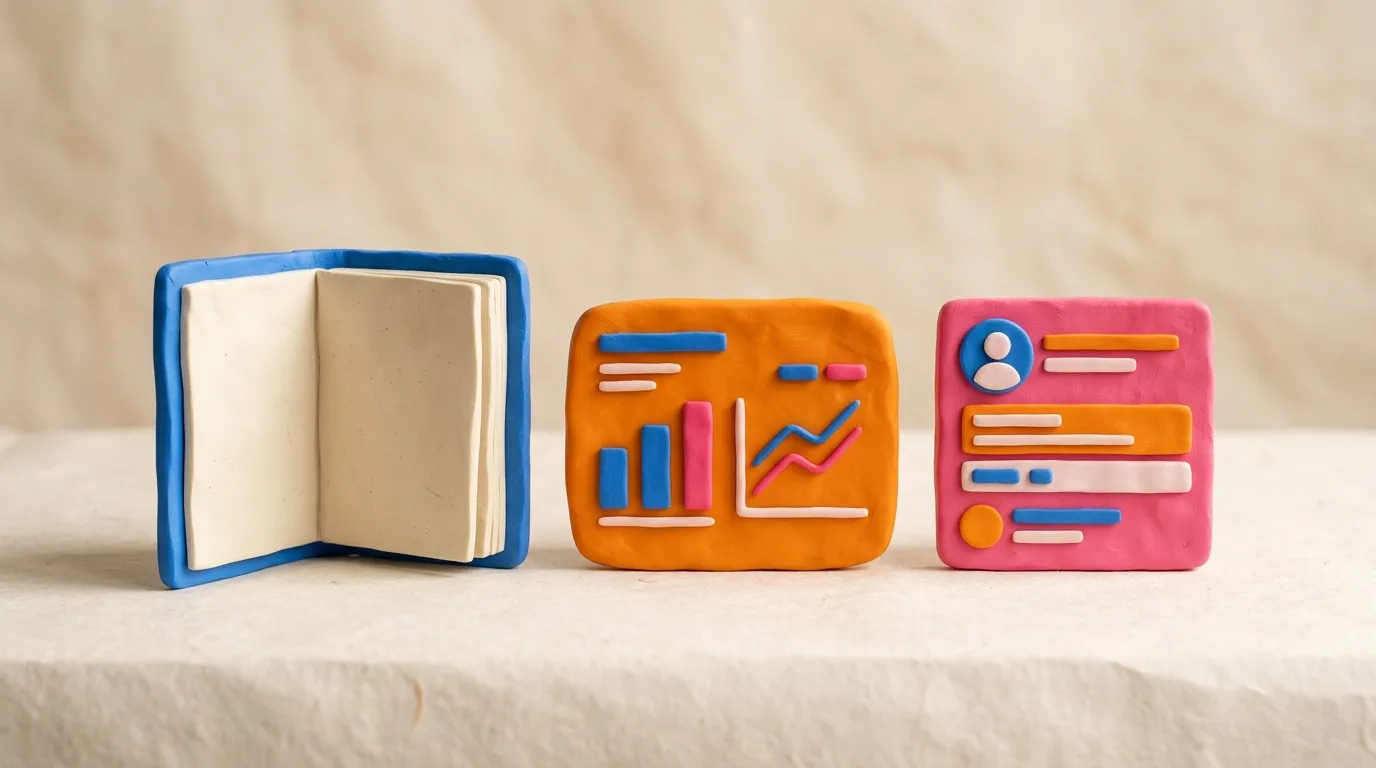
I have run paid social for a couple dozen B2B SaaS companies, and the pattern is always the same. The product is good, the targeting is fine, the landing page converts. The thing holding the account back is the creative. Founders treat the ad like an afterthought, a logo on a gradient with a feature list, then wonder why the cost per lead keeps climbing.
The good news is that B2B SaaS creative is more learnable than consumer creative. Your buyer is rational, time-poor, and skeptical. That is a tight brief, not a vague one. Below is the playbook I hand to every client, the angles that consistently work, the formats worth your time, and a simple system so you are not reinventing the wheel every sprint.
Start with the angle, not the asset
Most teams jump straight to design. That is backwards. The angle, the single idea the ad is arguing, is what determines whether anyone stops scrolling. For B2B SaaS, four angles do the heavy lifting, and almost every winning ad I have seen is one of them sharpened to a point.
- Pain. Name the specific, expensive problem your buyer lives with. Not "streamline your workflow," but "your team spends Friday reconciling spreadsheets that should reconcile themselves." Specific pain beats broad benefit every time.
- Proof. Lead with a result. A number, a logo, a before-and-after. "Cut onboarding from 6 weeks to 4 days" does more than any adjective you could write about the product.
- Comparison. Position against the status quo, whether that is a competitor, a spreadsheet, or doing nothing. Buyers understand a product fastest when they see what it replaces.
- ROI. Translate the product into money or time saved. The CFO-friendly framing, "pays for itself in 60 days," unlocks budget that a feature list never will.
Pick one angle per ad. The instinct to cram pain, proof, and ROI into a single creative is how you end up with a busy ad that argues nothing. One ad, one idea.
Formats that actually earn their slot
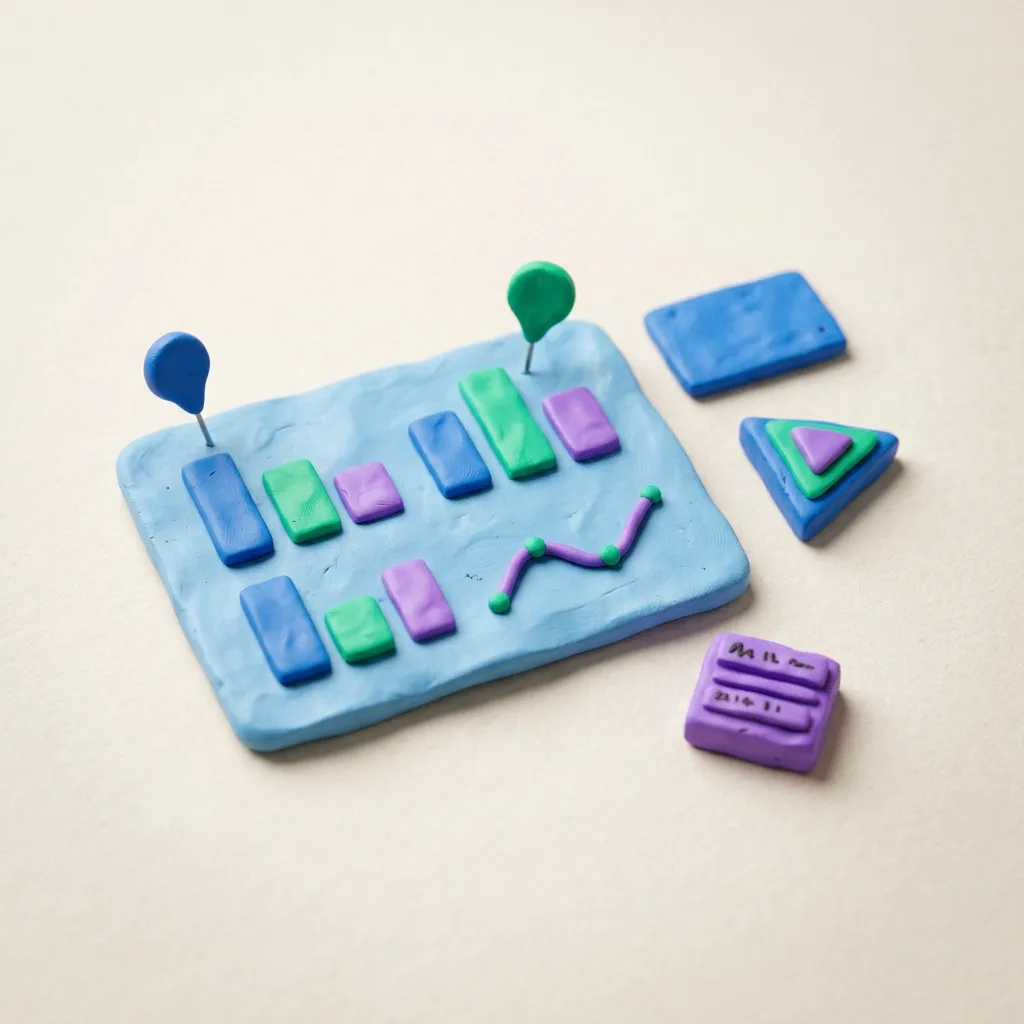
You do not need a film crew. You need formats that survive a fast scroll and read on a phone. These are the ones that consistently pull their weight for B2B SaaS.
- The bold-statement static. One claim, big type, brand color, minimal chrome. It is the cheapest creative to produce and still the most reliable performer. If you only make one thing, make this.
- The annotated product shot. A clean screenshot of the actual product with one or two callouts pointing at the magic moment. It answers "what is this" before the click, which raises lead quality.
- The native text post. Especially on LinkedIn, an ad that looks like a founder wrote it, plain text, a real point of view, no stock polish, outperforms the glossy version more often than people expect. I break down a few real examples in this LinkedIn ads teardown.
- The short founder video. Fifteen to thirty seconds of a real person making one argument to camera. It builds trust no static can, and it does not need production value, it needs a clear point.
Platform note. LinkedIn rewards the native, written, credibility-forward formats because the feed is professional and considered. Meta rewards motion and pattern interrupts because the feed is faster and more visual. Same angle, different dress code, which is exactly the trade-off I unpack in Meta Ads versus LinkedIn Ads.
Social proof is your unfair advantage
B2B buyers do not trust your claims. They trust their peers. This is the single biggest lever in B2B SaaS creative, and most accounts barely use it. Every credibility signal you have should be working in an ad somewhere.
- Customer logos. A row of recognizable companies says "people like you already decided" in under a second.
- The quotable result. A short customer quote with a real name and title beats an anonymous testimonial. Specificity reads as truth.
- The hard number. Ratings, user counts, time saved, dollars recovered. One concrete figure anchors the whole ad.
A good rule. If an ad makes a claim, it should also carry the proof for that claim in the same frame. Claim without proof is just noise the buyer has learned to ignore.
The offer decides who clicks
The creative gets attention. The offer decides whether the right person acts. In B2B SaaS the offer is a filter, and getting it wrong is how you fill the pipeline with leads sales will never close.
- Top of funnel. Low-commitment value. A teardown, a benchmark report, a calculator. You are buying attention and an email, not a demo.
- Mid funnel. A product-led offer. A free trial, an interactive tour, a template. The buyer wants to poke at the thing before they talk to anyone.
- Bottom of funnel. The demo or the pricing conversation, aimed only at people who have already shown intent. This is your most expensive click, so do not waste it on cold traffic.
Match the offer to the temperature of the audience. A demo CTA on a cold prospecting ad is the most common, most expensive mistake I see.
Build a creative system, not one-off ads
The teams that win at paid social are not more creative. They are more systematic. They treat creative like a portfolio of small bets and let the data, not opinions, decide what scales. Here is the lightweight system I set up for every account.
- Build a matrix. Four angles across the top, four formats down the side. That is a backlog of focused ideas before you have designed a thing.
- Ship in batches. Launch four to six variations at once, each isolating one angle or one format. One ad cannot teach you anything, a batch can.
- Read the right signal. Early on, watch hook rate and click-through to judge the creative itself. Judge cost per qualified lead once volume is real, not on day one. If you are unsure which numbers to trust at each stage, start with the paid social metrics that actually matter.
- Iterate on winners. When something works, make five more from it. New hook, new proof point, new format, same core idea. Do not chase a brand-new concept every week.
The bottleneck in this loop is always production. Coming up with twenty variations is easy. Actually producing twenty on-brand, on-platform ads is where most teams stall, and the matrix quietly dies in a spreadsheet.
Putting it to work
None of this requires a creative department. It requires discipline. One angle per ad, a format that fits the platform, proof in every frame, an offer matched to the audience, and a system that turns winners into more winners. Do that and your cost per lead will fall without touching your targeting.
The one tool I will mention, because it tackles the production bottleneck above head-on, is Adkumo. You browse a library of proven ads, adopt the structure of one that fits your angle, and it rebuilds the ad on-brand with your colors and voice, then launches straight to LinkedIn and Meta. That is how I keep a creative matrix moving instead of watching it stall in a backlog. If production is the place your testing loop keeps snapping, it is worth a quiet afternoon to try.