%20--%3e%3csvg%20width='42mm'%20height='64mm'%20viewBox='0%200%2041.999999%2064.000001'%20version='1.1'%20id='svg1'%20xml:space='preserve'%20inkscape:version='1.4.4%20(dcaf3e7d9e,%202026-05-05)'%20sodipodi:docname='adkumo-cards-color.svg'%20xmlns:inkscape='http://www.inkscape.org/namespaces/inkscape'%20xmlns:sodipodi='http://sodipodi.sourceforge.net/DTD/sodipodi-0.dtd'%20xmlns='http://www.w3.org/2000/svg'%20xmlns:svg='http://www.w3.org/2000/svg'%3e%3csodipodi:namedview%20id='namedview1'%20pagecolor='%23ffffff'%20bordercolor='%23000000'%20borderopacity='0.25'%20inkscape:showpageshadow='2'%20inkscape:pageopacity='0.0'%20inkscape:pagecheckerboard='0'%20inkscape:deskcolor='%23d1d1d1'%20inkscape:document-units='mm'%20inkscape:zoom='1.4142136'%20inkscape:cx='57.275649'%20inkscape:cy='123.39013'%20inkscape:window-width='1854'%20inkscape:window-height='1011'%20inkscape:window-x='66'%20inkscape:window-y='32'%20inkscape:window-maximized='1'%20inkscape:current-layer='g6528'%20/%3e%3cdefs%20id='defs1'%20/%3e%3cg%20inkscape:label='Layer%201'%20inkscape:groupmode='layer'%20id='layer1'%20transform='translate(-223.82077,-58.584489)'%3e%3cg%20id='g6528'%20transform='translate(9.9863014,0.36985863)'%3e%3crect%20style='fill:%239a5bfd;fill-opacity:1;stroke-width:0.229954'%20id='rect1'%20width='20'%20height='20'%20x='213.83447'%20y='58.21463'%20ry='5'%20/%3e%3crect%20style='fill:%239a5bfd;fill-opacity:1;stroke-width:0.229953'%20id='rect1-8'%20width='20'%20height='20'%20x='235.83447'%20y='102.21463'%20ry='5'%20/%3e%3crect%20style='fill:%23fd3c80;fill-opacity:1;stroke-width:0.229953'%20id='rect1-1'%20width='20'%20height='20'%20x='213.83447'%20y='80.21463'%20ry='5'%20/%3e%3crect%20style='fill:%23fd8902;fill-opacity:1;stroke-width:0.229953'%20id='rect1-1-0'%20width='20'%20height='20'%20x='213.83447'%20y='102.21463'%20ry='5'%20/%3e%3crect%20style='fill:%2305e09b;fill-opacity:1;stroke-width:0.229953'%20id='rect1-1-6-7'%20width='20'%20height='20'%20x='235.83447'%20y='58.21463'%20ry='5'%20/%3e%3crect%20style='fill:%23307eeb;fill-opacity:1;stroke-width:0.229953'%20id='rect1-1-6-7-4'%20width='20'%20height='20'%20x='235.83447'%20y='80.21463'%20ry='5'%20/%3e%3c/g%3e%3c/g%3e%3c/svg%3e)
The 3-Layer Framework for Keeping Ads On-Brand at Scale
On-brand at scale is a structure problem, not a taste problem. The three layers, brand DNA, proven structure, and channel adaptation, that keep every ad yours.

I have spent the better part of a decade helping companies scale their paid social, and the same failure mode shows up at almost every one of them. The first ten ads look like the brand. The next hundred do not. Somewhere between the brand book and the ad account, consistency quietly leaks out, and what reaches the feed is a pile of assets that could belong to anyone.
This is not a discipline problem. It is a structure problem, and consistency is the part teams under-invest in, not creativity. Teams treat "on-brand" as a vibe that a careful designer either nails or misses, rather than a system you can actually operationalize. The teams that stay on-brand at scale are not more talented. They have just separated the problem into layers, so that each layer has one job and one owner.
Here is the framework I bring into every engagement. Three layers, stacked in order, each one resting on the one below it. Get the order wrong and the whole thing wobbles. Get it right and a junior marketer can ship fifty variants a week that all unmistakably belong to you.
Layer one: the brand DNA foundation
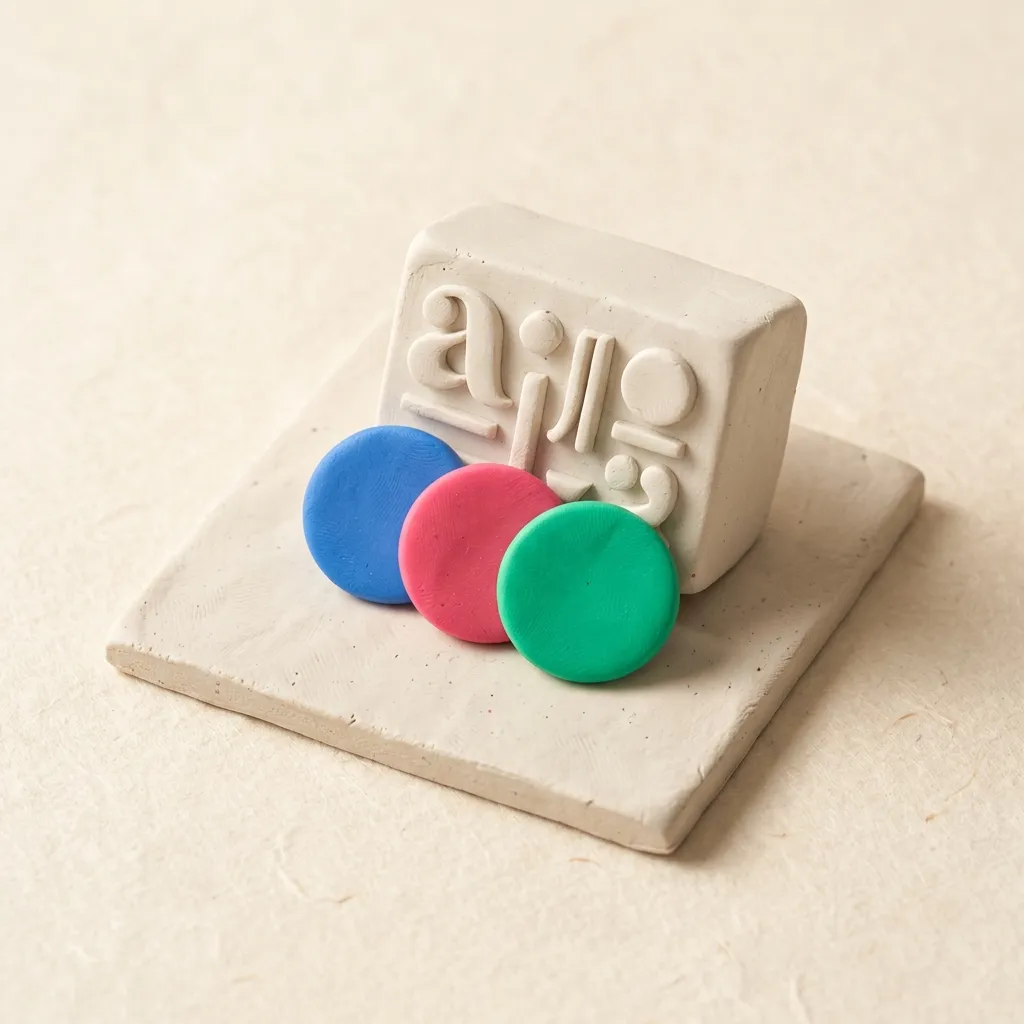
The bottom layer is the one everyone claims to have and almost nobody has in a usable form. Brand DNA is the codified, machine-readable version of your identity: the exact voice and tone, the precise color values, the typographic rules, the do-and-do-not of how the brand speaks and looks. Not a forty-page PDF that lives in a drive nobody opens. A tight, explicit set of rules that any tool or person can apply the same way every time.
The reason this has to be the foundation is simple. Every decision above it inherits from it. If the voice is fuzzy, every headline drifts a little differently. If the color values live in someone's memory instead of a spec, every designer eyeballs them and every ad lands a shade off. Consistency at scale is impossible if the source of truth is implicit.
- Voice. Write down how the brand sounds in one sentence, then three example lines that are right and three that are wrong. Examples travel further than adjectives.
- Color. Exact values, with roles. Which color is primary, which is the accent, what never appears next to what.
- Type. The faces, the weights, the sizes, and the hierarchy. A headline should be recognizable as yours before anyone reads a word of it.
If you do nothing else from this post, make this layer explicit. It is the cheapest, highest leverage work you will do all quarter.
Layer two: start from proven structure

The second layer is where most teams quietly waste their best people. They sit a talented designer in front of a blank canvas and ask them to invent a high-performing ad from nothing, every single time. That is not creativity, it is gambling, and it does not scale because the output quality swings wildly with whoever happened to be assigned the brief.
The teams that ship consistently do the opposite. They start from structure that is already proven to work, because in most cases your best ad already exists somewhere. A hook that has earned attention before. A layout that has driven clicks. A copy pattern that has converted. The creative job stops being "invent a winner" and becomes "adapt a known winner to us," which is a far more reliable thing to ask of a team at volume.
This is not plagiarism and it is not a template trap. The structure is the skeleton: the sequence of attention, message, and ask. Your brand DNA from layer one is the skin you stretch over it. Two brands can run the same proven structure and look nothing alike, because the foundation underneath them is different.
The practical move. Build a small library of structures that have performed, whether yours or competitors you admire, and make "which proven structure are we adapting here" the first question on every brief. You will be shocked how much variance in quality disappears.
Layer three: channel adaptation
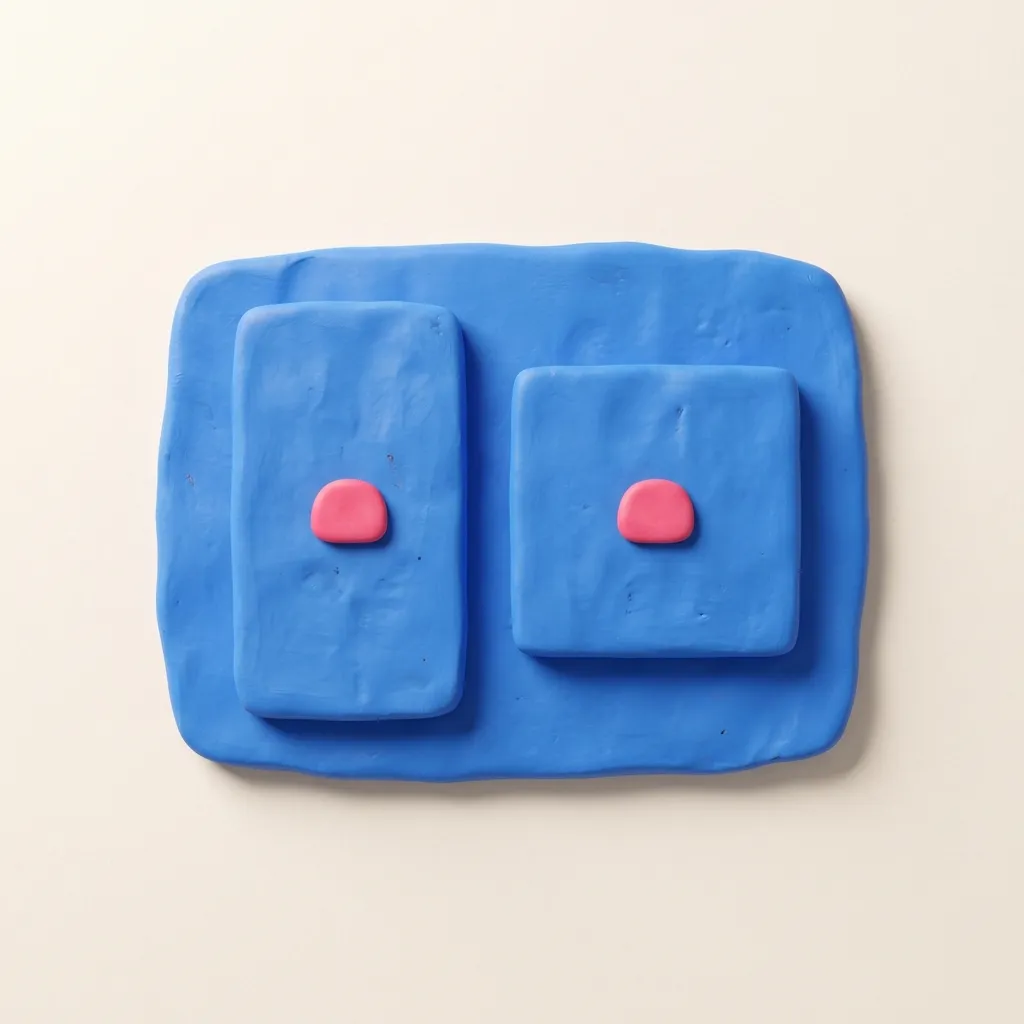
The top layer is the one teams either over-think or completely skip. A concept that is on-brand and structurally sound still has to live somewhere, and the somewhere has rules. A feed-native Meta ad and a LinkedIn ad are not the same asset resized. The aspect ratio, the copy length, the tone register, the amount of context the reader brings, all of it shifts by channel.
The mistake is letting channel adaptation reach back down and corrupt the layers below it. When a team rewrites the voice to "sound more LinkedIn," the brand fractures across channels. The discipline is that adaptation only touches the surface: format, dimensions, the length of the line, the platform-native framing. The voice, the color, the structure, those stay locked. Same concept, same brand, reshaped for where it lives.
- Meta. Feed-native, scroll-stopping, casual register, vertical and square formats that reward a fast hook.
- LinkedIn. Professional context, a touch more credibility up front, formats and copy length tuned to a reader who is in work mode.
Done right, someone scrolling Meta and someone scanning LinkedIn see two ads that obviously came from the same brand, each one tuned to feel native where it sits.
How to apply the framework
The order is the whole point. Build it bottom-up, and never let an upper layer rewrite a lower one. In practice that looks like this:
- Codify the foundation first. Get voice, color, and type into an explicit spec before you touch a single ad. This is a one-time investment that pays off forever.
- Choose structure, do not invent it. For every new ad, pick a proven skeleton, then dress it in your brand DNA. Adapt, do not gamble.
- Adapt last, and only the surface. Reshape the finished concept for Meta and LinkedIn without ever touching the voice or the structure underneath.
The reason this holds at scale is that each layer is a constraint, not a guideline. A junior marketer working inside three hard constraints produces more consistent output than a senior one working from a vague brand book and good intentions. Constraints are what let you remove yourself from the loop without quality falling apart.
Where the leverage really is
Staying on-brand at scale was never about hiring better taste. It is about refusing to re-decide your identity on every asset. Codify the foundation, start from proven structure, adapt only the surface, and consistency stops being a hope and becomes a property of the system.
The hard part, honestly, is keeping these three layers wired together when you are moving fast. That is precisely the discipline Adkumo bakes into every adoption: browse proven ads, adopt one on-brand through your brand DNA, and launch it adapted to Meta and LinkedIn, with the three layers enforced rather than remembered. You can absolutely build this by hand, as I have with plenty of teams, and you are welcome to wire it in for yourself if you would rather not think about the plumbing.